
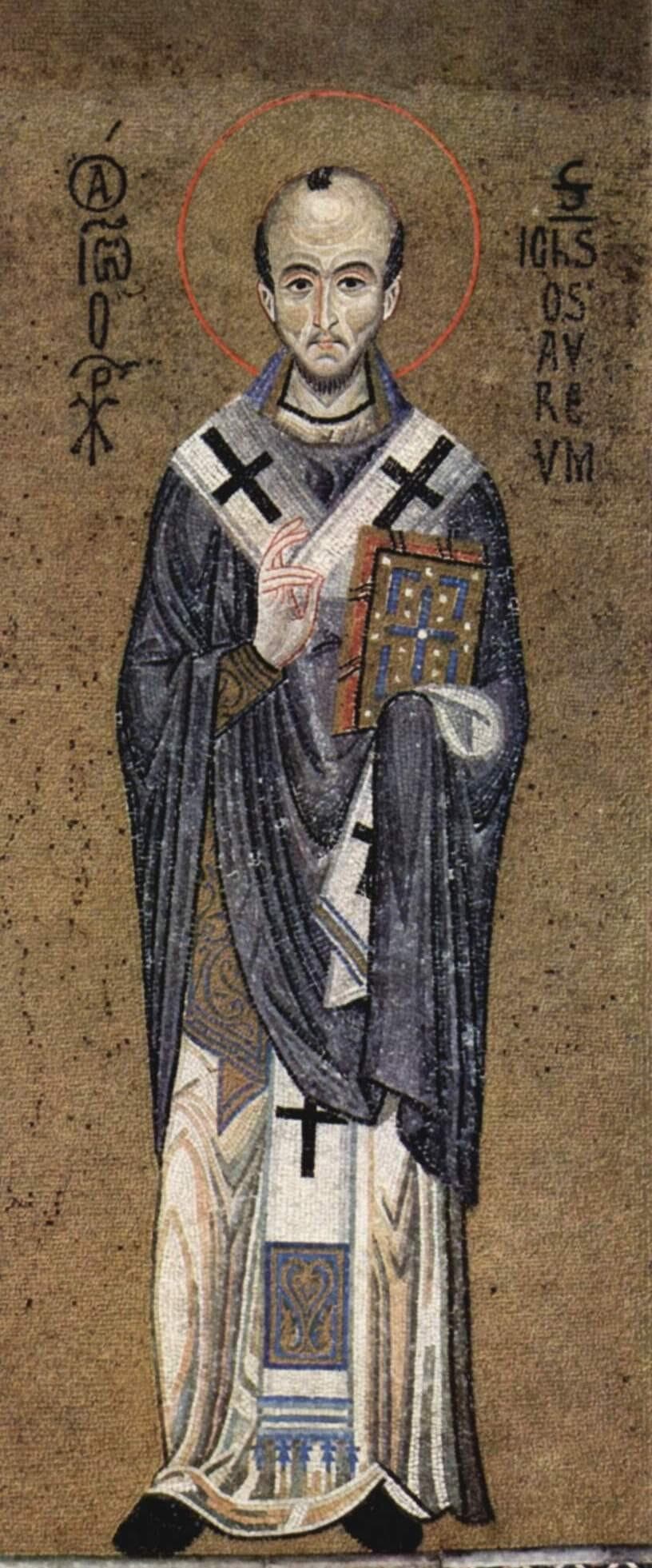
John Chrysostom
Catena Aurea · Johannesevangelium 13
Now before the feast of the passover, when Jesus knew that his hour was come that he should depart out of this world unto the Father, having loved his own which were in the world, he loved them unto the end. And supper being ended, the devil having now put into the heart of Judas Iscariot, Simon’s son, to betray him; Jesus knowing that the Father had given all things into his hands, and that he was come from God, and went to God; He riseth from supper, and laid aside his garments; and took a towel, and girded himself. After that he poureth water into a bason, and began to wash the disciples’ feet, and to wipe them with the towel wherewith he was girded.
(Hom. lxx. 1) He did not know then for the first time: He had known long before. By His departure He means His death. Being so near leaving His disciples, He shews the more love for them: Having loved His own which were in the world, He loved them unto the end; i. e. He left nothing undone which one who greatly loved should do. He reserved this for the last, that their love might be increased by it, and to prepare them by such consolation for the trials that were coming. His own He calls them, in thesense of intimacy. The word was used in another sense in the beginning of the Gospel: (c. 1:11) His own received Him not. It follows, which were in the world: for those were dead who were His own, such as Abraham, Isaac, and Jacob, who were not in the world. These then, His own which were in the world, He loved all along, and at the last manifested His love in completeness: He loved them unto the end.