
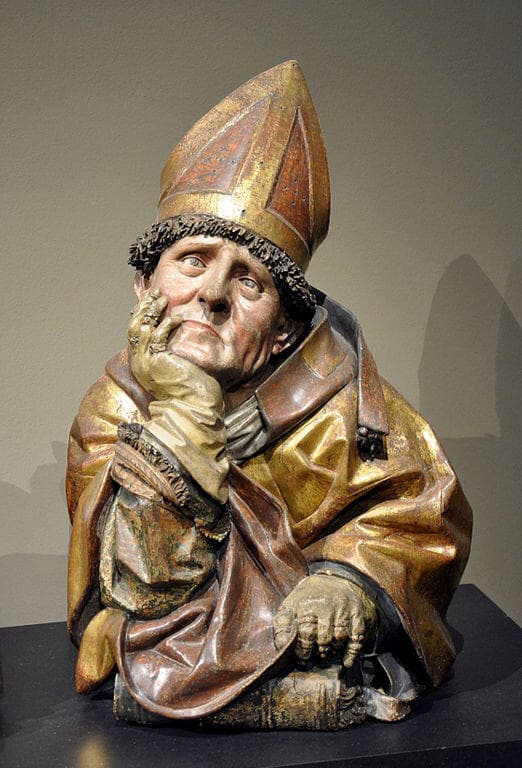
Augustine of Hippo
Catena Aurea · Johannesevangelium 13
Now before the feast of the passover, when Jesus knew that his hour was come that he should depart out of this world unto the Father, having loved his own which were in the world, he loved them unto the end. And supper being ended, the devil having now put into the heart of Judas Iscariot, Simon’s son, to betray him; Jesus knowing that the Father had given all things into his hands, and that he was come from God, and went to God; He riseth from supper, and laid aside his garments; and took a towel, and girded himself. After that he poureth water into a bason, and began to wash the disciples’ feet, and to wipe them with the towel wherewith he was girded.
(Tr. lv. 2) He loved them unto the end, i. e. that they themselves too might pass out of this worlda, by love, unto Him their head. For what is unto the end, but unto Christ? (Rom. 10:4) For Christ is the end of the law for righteousness to every one that believeth. But these words may be understood after a human sort, to mean that Christ loved His own up to His death. But God forbid that He should end His love by death, who is not ended by death: except indeed we understand it thus: He loved His own unto death: i. e. His love for them led Him to death. And supper having been made, i. e. having been got ready, and laid on the table before them; not having been consumed and finished: for it was during supper that He rose, and washed His disciples’ feet; as after this He sat at table again, and gave the sop to the traitor. What follows: The devil having now put it into the heart of Judas Iscariot, Simon’s son, to betray Him, refers to a secret suggestion, not made to the ear, but to the mind; the suggestions of the devil being part of our own thoughts. Judas then had already conceived, through diabolical instigation, the intention of betraying his Master.