
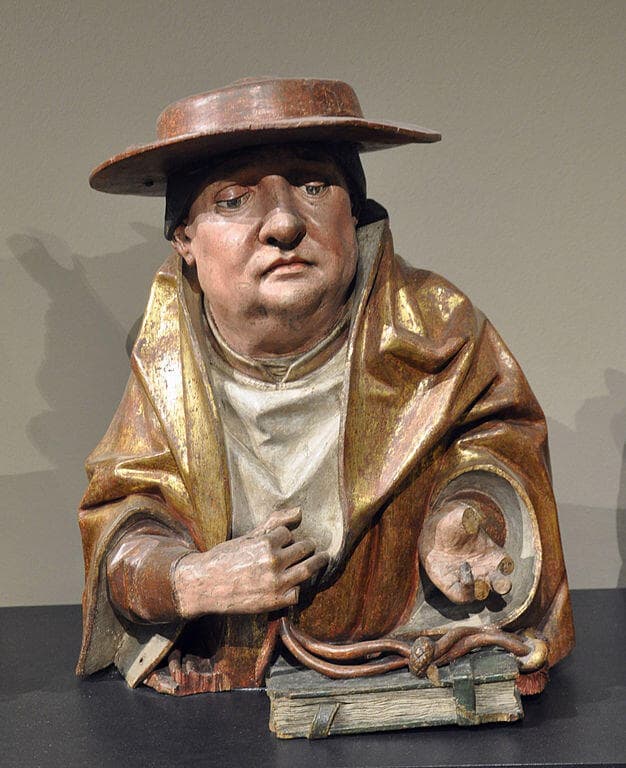
Jerome
Catena Aurea · Matthäusevangelium 22
Then went the Pharisees, and took counsel how they might entangle him in his talk. And they sent out unto him their disciples with the Herodians, saying, Master, we know that thou art true, and teachest the way of God in truth, neither carest thou for any man: for thou regardest not the person of men. Tell us therefore, What thinkest thou? Is it lawful to give tribute unto Cæsar, or not? But Jesus perceived their wickedness, and said, Why tempt ye me, ye hypocrites? Shew me the tribute money. And they brought unto him a penny. And he saith unto them, Whose is this image and superscription? They say unto him, Cæsar’s. Then saith he unto them, Render therefore unto Cæsar the things which are Cæsar’s; and unto God the things that are God’s. When they had heard these words, they marvelled, and left him, and went their way.
Lately under Cæsar Augustus, Judæa, which was subject to the Romans, had been made tributary when the census was held of the whole world; and there was a great division among the people, some saying that tribute ought to be paid to the Romans in return for the security and quiet which their arms maintained for all. The Pharisees on the other hand, self-satisfied in their own righteousness, contended that the people of God who paid tithes and gave first-fruits, and did all the other things which are written in the Law, ought not to be subject to human laws. But Augustus had given the Jews as king, Herod, son of Antipater, a foreigner and proselyte; he was to exact the tribute, yet to be subject to the Roman dominion. The Pharisees therefore send their disciples with the Herodians, that is, with Herod’s soldiers, or those whom the Pharisees in mockery called Herodians, because they paid tribute to the Romans, and were not devoted to the worship of God.