
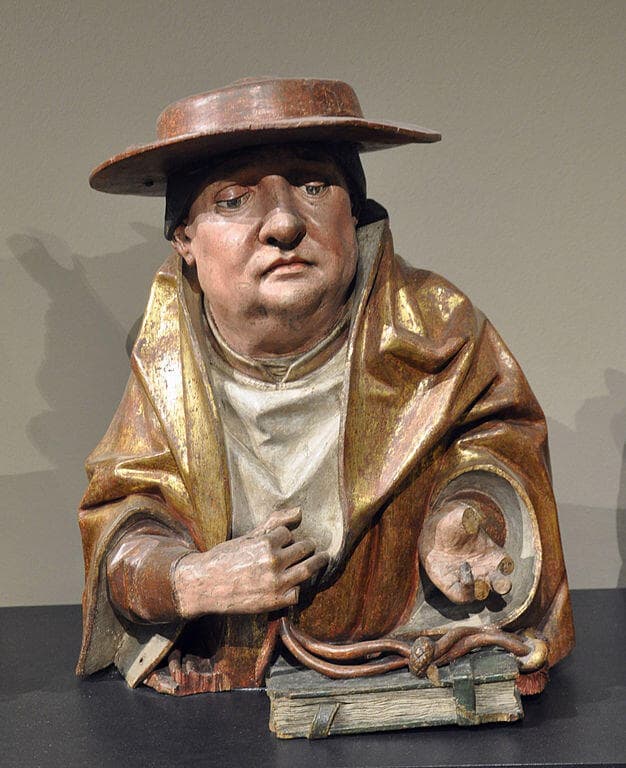
Jerome
Catena Aurea · Matthäusevangelium 17
And when they were come to Capernaum, they that received tribute money came to Peter, and said, Doth not your master pay tribute? He saith, Yes. And when he was come into the house, Jesus prevented him, saying, What thinkest thou, Simon? of whom do the kings of the earth take custom or tribute? of their own children, or of strangers? Peter saith unto him, Of strangers. Jesus saith unto him, Then are the children free. Notwithstanding, lest we should offend them, go thou to the sea, and cast an hook, and take up the fish that first cometh up; and when thou hast opened his mouth, thou shalt find a piece of money: that take, and give unto them for me and thee.
I am at a loss what first to admire in this passage; whether the foreknowledge, or the mighty power of the Saviour. His foreknowledge, in that He knew that a fish had a stater in its mouth, and that that fish should be the first taken; His mighty power, if the stater were created in the fish’s mouth at His word, and if by His command that which was to happen was ordered. Christ then, for His eminent love, endured the cross, and paid tribute; how wretched we who are called by the name of Christ, though we do nothing worthy of so great dignity, yet in respect of His majesty, pay no tribute, but are exempt from tax as the King’s sons. But even in its literal import it edifies the hearer to learn, that so great was the Lord’s poverty, that He had not whence to pay the tribute for Himself and His Apostle. Should any object that Judas bore money in a bag, we shall answer, Jesus held it a fraud to divert that which was the poor’s to His own use, and left us an example therein.