
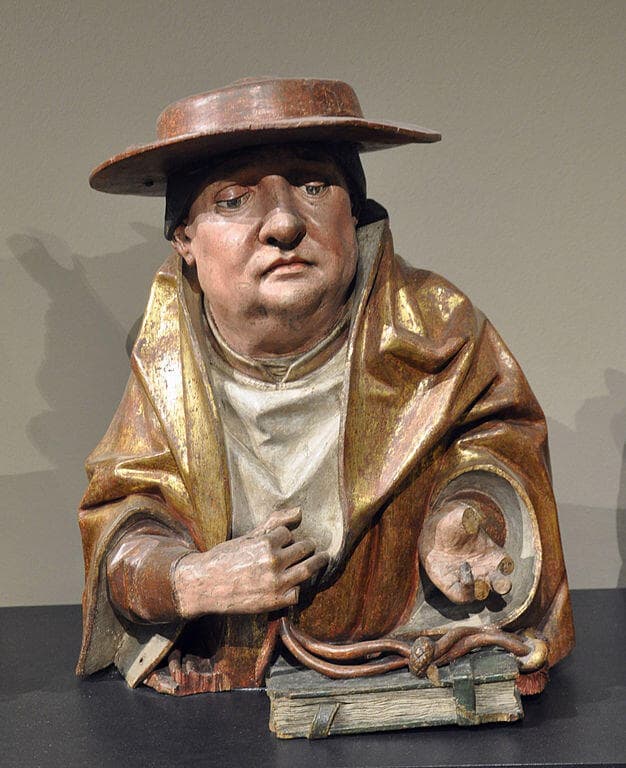
Jerome
Catena Aurea · Matthäusevangelium 16
When Jesus came into the coasts of Cæsarea Philippi, he asked his disciples, saying, Whom do men say that I the Son of man am? And they said, Some say that thou art John the Baptist; some, Elias; and others, Jeremias, or one of the prophets. He saith unto them, But whom say ye that I am? And Simon Peter answered and said, Thou art the Christ, the Son of the living God. And Jesus answered and said unto him, Blessed art thou, Simon Barjona: for flesh and blood hath not revealed it unto thee, but my Father which is in heaven. And I say also unto thee, That thou art Peter, and upon this rock I will build my Church: and the gates of hell shall not prevail against it. And I will give unto thee the keys of the kingdom of heaven: and whatsoever thou shalt bind on earth shall be bound in heaven: and whatsoever thou shalt loose on earth shall be loosed in heaven.
Bishops and Presbyters; not understanding this passage, assume to themselves something of the lofty pretensions of the Pharisees, and suppose that they may either condemn the innocent, or absolve the guilty; whereas what will be enquired into before the Lord will be not the sentence of the Priests, but the life of him that is being judged. We read in Leviticus of the lepers, how they are commanded to shew themselves to the Priests, and if they have the leprosy, then they are made unclean by the Priest; not that the Priest makes them leprous and unclean, but that the Priest has knowledge of what is leprosy and what is not leprosy, and can discern who is clean, and who is unclean. In the same way then as there the Priestmakes the leper unclean, here the Bishop or Presbyter binds or looses not those who are without sin, or guilt, but in discharge of his function when he has heard the varieties of their sins, he knows who is to be bound, and who loosed.