
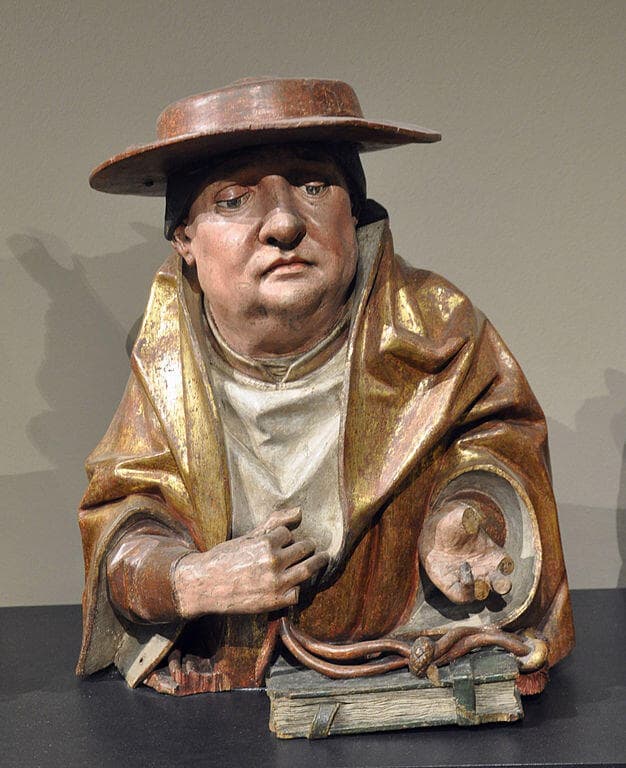
Jerome
Catena Aurea · Matthäusevangelium 16
When Jesus came into the coasts of Cæsarea Philippi, he asked his disciples, saying, Whom do men say that I the Son of man am? And they said, Some say that thou art John the Baptist; some, Elias; and others, Jeremias, or one of the prophets. He saith unto them, But whom say ye that I am? And Simon Peter answered and said, Thou art the Christ, the Son of the living God. And Jesus answered and said unto him, Blessed art thou, Simon Barjona: for flesh and blood hath not revealed it unto thee, but my Father which is in heaven. And I say also unto thee, That thou art Peter, and upon this rock I will build my Church: and the gates of hell shall not prevail against it. And I will give unto thee the keys of the kingdom of heaven: and whatsoever thou shalt bind on earth shall be bound in heaven: and whatsoever thou shalt loose on earth shall be loosed in heaven.
This return Christ makes to the Apostle for the testimony which Peter had spoken concerning Him, Thou art Christ, the Son of the living God. The Lord said unto him, Blessed art thou, Simon Bar-jonas? Why? Because flesh and blood has not revealed this unto thee, but My Father. That which flesh and blood could not reveal, was revealed by the grace of the Holy Spirit. By his confession then he obtains a title, which should signify that he had received a revelation from the Holy Spirit, whose son he shall also be called; for Barjonas in our tongue signifies The son of a dove. Others take it in the simple sense, that Peter is the son of Johnq, according to that question in another place, Simon, son of John, lovest thou me? (John 21:15.) affirming that it is an error of the copyists in writing here Barjonas for Barjoannas, dropping one syllable. Now Joanna is interpreted ‘The grace of God.’ But either name has its mystical interpretation; the dove signifies the Holy Spirit; and the grace of God signifies the spiritual gift.