
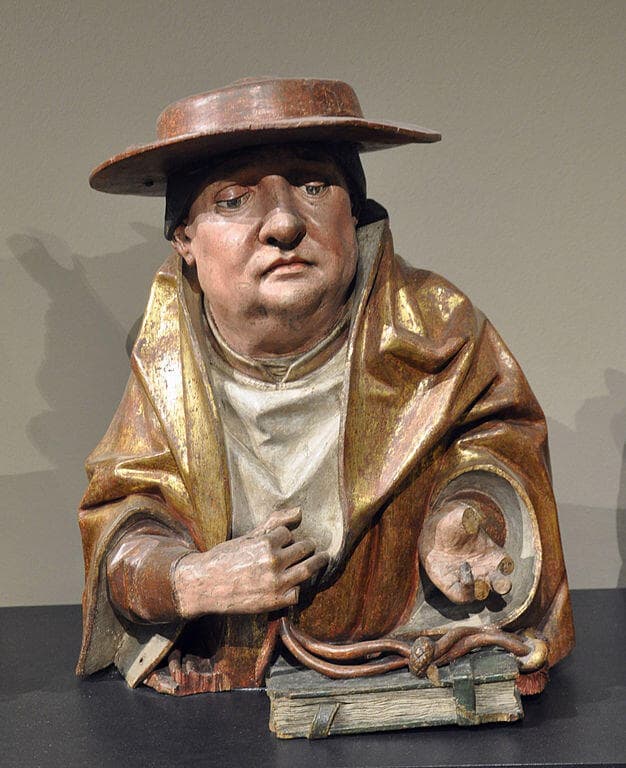
Jerome
Catena Aurea · Matthäusevangelium 13
Another parable put he forth unto them, saying, The kingdom of heaven is likened unto a man which sowed good seed in his field: But while men slept, his enemy came and sowed tares among the wheat, and went his way. But when the blade was sprung up, and brought forth fruit, then appeared the tares also. So the servants of the householder came and said unto him, Sir, didst not thou sow good seed in thy field; from whence then hath it tares? He said unto them, An enemy hath done this. The servants said unto him, Wilt thou then that we go and gather them up? But he said, Nay; lest while ye gather up the tares, ye root up also the wheat with them. Let both grow together until the harvest: and in the time of harvest I will say to the reapers, Gather ye together first the tares, and bind them in bundles to burn them: but gather the wheat into my barn.
But this seems to contradict that command, Put away the evil from among you. (1 Cor. 5:13) For if the rooting up be forbidden, and we are to abide in patience till the harvest-time, how are we to cast forth any from among us? But between wheat and tares (which in Latin we call ‘lolium’) so long as it is only in blade, before the stalk has put forth an ear, there is very great resemblance, and none or little difference to distinguish them by. The Lord then warns us not to pass a hasty sentence on an ambiguous word, but to reserve it for His judgment, that when the day of judgment shall come, He may cast forth from the assembly of the saints no longer on suspicion but on manifest guilt.