
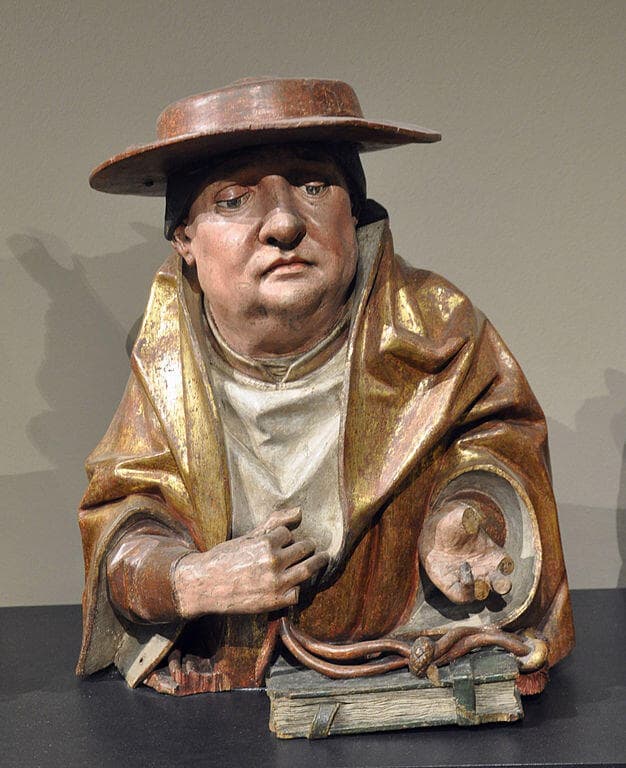
Jerome
Catena Aurea · Matthäusevangelium 12
When the unclean spirit is gone out of a man, he walketh through dry places, seeking rest, and findeth none. Then he saith, I will return into my house from whence I came out; and when he is come, he findeth it empty, swept, and garnished. Then goeth he, and taketh with himself seven other spirits more wicked than himself, and they enter in and dwell there: and the last state of that man is worse than the first. Even so shall it be also unto this wicked generation.
Some suppose that this place is spoken of heretics, because the unclean spirit who dwelt in them before when they were Gentiles, is cast out before the confession of the true faith; when after they went over to heresy, and garnished their house with feigned virtues, then it is that the Devil, having taken to him other seven evil spirits, returns and dwells in them; and their last state becomes worse than their first. And indeed heretics are in a much worse condition than the Gentiles; for in the heretics was a hope of faith, in the Gentiles a war of discord. Yet though this exposition has a plausibility and a shew of learning, I am doubtful of its truth. For by the concluding words of this, whether it be parable or example, Titus shall it he to this evil generation, we are compelled to refer it, not to heretics, or to men in general, but to the Jewish people. So the context of the passage may not shift about loosely and vaguely, and be like unmeaning speeches, but may be consistent with itself from first to last. The unclean spirit then went out from the Jews when they received the Law; and being cast out of the Jews, he walked through the wilderness of the Gentiles; as it follows, He walketh through dry places seeking rest.