
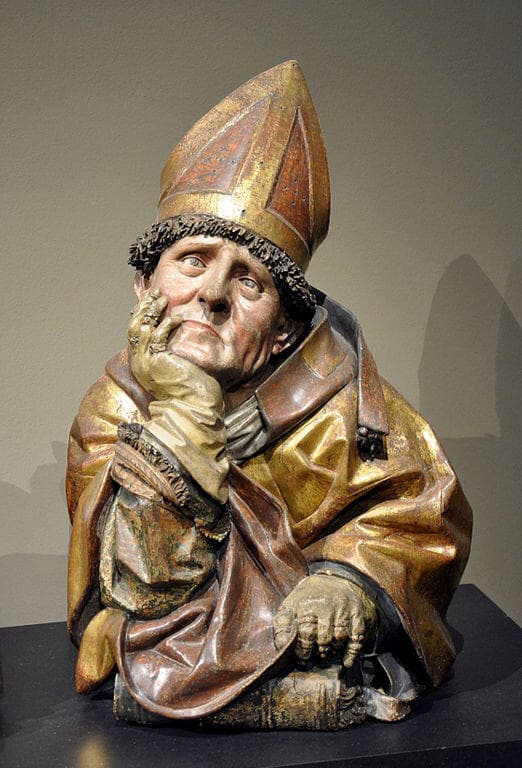
Augustine of Hippo
Catena Aurea · Matthäusevangelium 11
Then began he to upbraid the cities wherein most of his mighty works were done, because they repented not: Woe unto thee, Chorazin! woe unto thee, Bethsaida! for if the mighty works, which were done in you, had been done in Tyre and Sidon, they would have repented long ago in sackcloth and ashes. But I say unto you, It shall be more tolerable for Tyre and Sidon at the day of judgment, than for you. And thou, Capernaum, which art exalted unto heaven, shalt be brought down to hell: for if the mighty works, which have been done in thee, had been done in Sodom, it would have remained until this day. But I say unto you, That it shall be more tolerable for the land of Sodom in the day of judgment, than for thee.
(De Cons. Ev. ii. 32.) Luke also gives this as spoken in continuation of some other of the Lord’s discourses; from which it appears that he has rather followed the actual order of events; Matthew to have followed his recollection. Or the words of Matthew, Then began he to upbraid the towns, must be taken, as some think, as expressing some particular time by the word then, but not referring generally to that time in which the many other things here told were done and said. Whoever, therefore, thinks thus must suppose that this was spoken twice. And when we find in the same Evangelist some things spoken by the Lord at two different times—like that in Luke concerning the not taking a scrip for their journey,—what wonder is it if any thing else, which was twice spoken, is found once severally in two several Gospels in the actual connexion in which it was spoken, which connexion is different, because they are two different occasions on which it is related to have been spoken?