
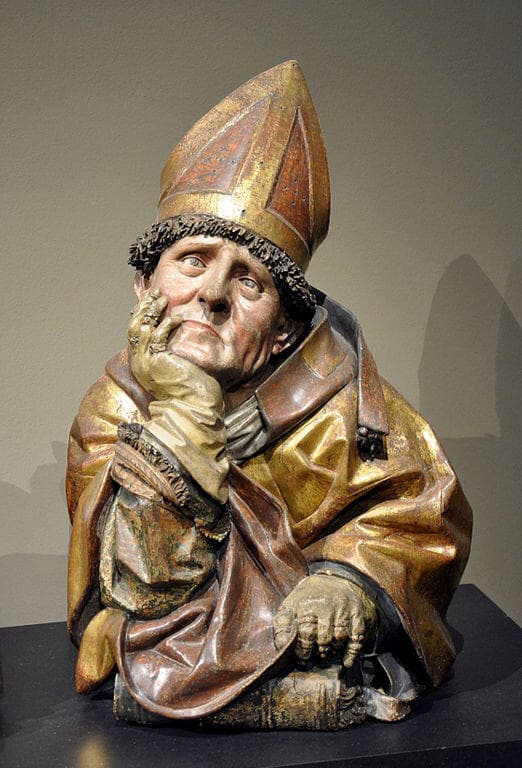
Augustine of Hippo
Catena Aurea · Matthäusevangelium 11
Then began he to upbraid the cities wherein most of his mighty works were done, because they repented not: Woe unto thee, Chorazin! woe unto thee, Bethsaida! for if the mighty works, which were done in you, had been done in Tyre and Sidon, they would have repented long ago in sackcloth and ashes. But I say unto you, It shall be more tolerable for Tyre and Sidon at the day of judgment, than for you. And thou, Capernaum, which art exalted unto heaven, shalt be brought down to hell: for if the mighty works, which have been done in thee, had been done in Sodom, it would have remained until this day. But I say unto you, That it shall be more tolerable for the land of Sodom in the day of judgment, than for thee.
(De Don. Pers. 10.) A certain Catholic disputant of some note expounded this place of the Gospel in the following way; That the Lord foreknew that they of Tyre and Sidon would fall from the faith after they had believed the miracles done among them; and that therefore in mercy He did not Hismiracles there; because they would have incurred the heavier penalty had they lapsed from the faith after having held it, than if they had never held it at all. Or otherwise, The Lord surely foreknew His mercies with which He deigns to deliver us. And this is the predestination of the saints, namely, the foreknowledge and making ready the mercies of God, by which they are most certainly saved, whosoever are saved. The rest are left to the just judgment of God in the general body of the condemned, where they of Tyre and Sidon are left, who might have believed had they seen Christ’s many miracles; but since it was not given them that they should believe, therefore that through which they might have believed was also withheld. From which it appears, that there are certain who have in their dispositions by nature a divine gift of understanding by which they would be moved to faith, if they should either hear words or see signs adapted to their minds. But if they be not by the high sentence of God set apart from the mass of perdition through the predestination of grace, then neither words nor works are set before them by God, which yet, could they have seen or heard them, would have stirred them to believe. In this general mass of perdition are the Jews also left, who could not believe so great and manifest wonders wrought before their eyes. And the cause wherefore they could not believe, the Gospel hath not hidden, speaking thus; Though he did so great miracles before them, yet could they not believe, as Esaias said, I have blinded their eyes, and hardened their heart. (John 12:37) Not in this way then were the eyes of they of Tyre and Sidon blinded, or their heart hardened, for they would have believed had they seen such wonders as these saw. But it profited those not that they could have believed, for that they were not predestinated; neither would it have been any hindrance to these that they had not power to believe, had they been so predestined that God should have enlightened their blindness, and taken away the heart of stone from within them.