
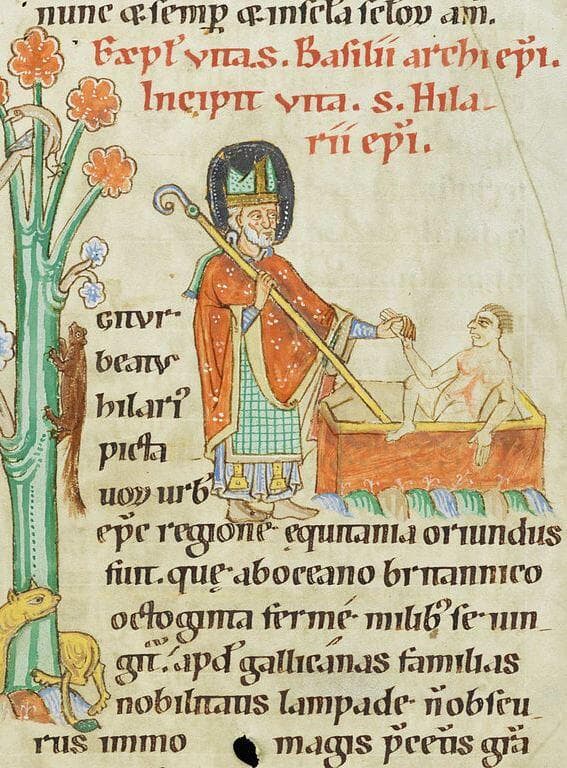
Hilary of Poitiers
Catena Aurea · Johannesevangelium 16
His disciples said unto him, Lo, now speakest thou plainly, and speakest no proverb. Now are we sure that thou knowest all things, and needest not that any man should ask thee: by this we believe that thou camest forth from God. Jesus answered them, Do ye now believe? Behold, the hour cometh, yea, is now come, that ye shall be scattered, every man to his own, and shall leave me alone: and yet I am not alone, because the Father is with me. These things I have spoken unto you, that in me ye might have peace. In the world ye shall have tribulation: but be of good cheer; I have overcome the world.
(vi. de Trin. c. 34) They believe that He came forth from God, because He does the works of God. For whereas our Lord had said both, I came forth from the Father, and, I am come into the world from the Father, they testified no wonder at the latter words, I am come into the world, which they had often heard before. But their reply shews a belief in and appreciation of the former, I came forth from the Father. And they notice this in their reply: By this we believe that Thou camest forth from God; not adding, and art come into the world, for they knew already that He was sent from God, but had not yet received the doctrine of His eternal generation. That unutterable doctrine they now began to see for the first time in consequence of these words, and therefore reply that He spoke no longer in parables. For God is not born from God after the manner of human birth: His is a coming forth from, rather than a birth from, God. He is one from one; not a portion, not a defection, not a diminution, not a derivation, not a pretension, not a passion, but the birth of living nature from living nature. He is God coming forth from God, not a creature appointed to the name of God; He did not begin to be from nothing, but came forth from an abiding (manente) nature. To come forth, hath the signification of birth, not of beginning.