
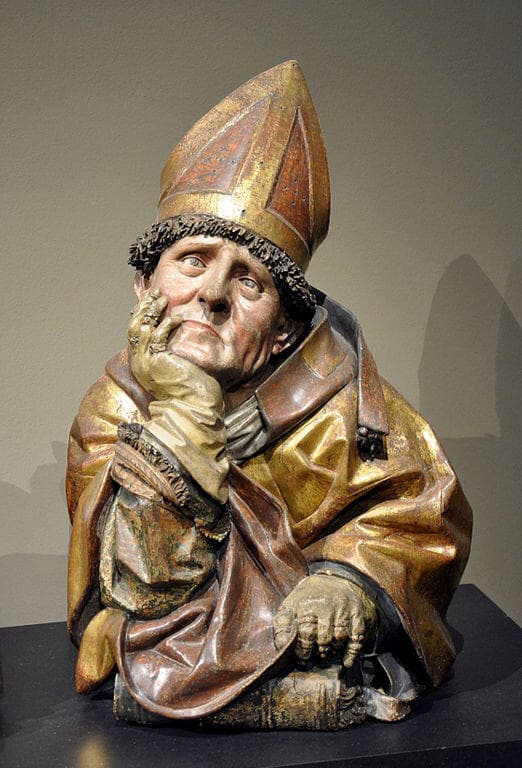
Augustine of Hippo
Catena Aurea · Johannesevangelium 16
His disciples said unto him, Lo, now speakest thou plainly, and speakest no proverb. Now are we sure that thou knowest all things, and needest not that any man should ask thee: by this we believe that thou camest forth from God. Jesus answered them, Do ye now believe? Behold, the hour cometh, yea, is now come, that ye shall be scattered, every man to his own, and shall leave me alone: and yet I am not alone, because the Father is with me. These things I have spoken unto you, that in me ye might have peace. In the world ye shall have tribulation: but be of good cheer; I have overcome the world.
(Tr. ciii. 2) Why this remark? To one Who knew all things, instead of saying, Thou needest not that any man should ask Thee; it would have been more appropriate to have said, Thou needest not to ask any man: yet we know that both of these were done, viz. that our Lord both asked questions, and was asked. But this is soon explained; for both were for the benefit, not of Himself, but of those whom He asked questions of, or by whom He was asked. He asked questions of men not in order to learn Himself, but to teach them: and in the case of those who asked questions of Him, such questions were necessary to them in order to gain the knowledge they wanted; but they were not necessary to Him to tell Him what that was, because He knew the wish of the enquirer, before the question was put. Thus to know men’s thoughts beforehand was no great thing for the Lord, but to the minds of babes it was a great thing: By this we know that Thou camest, forth from God.