
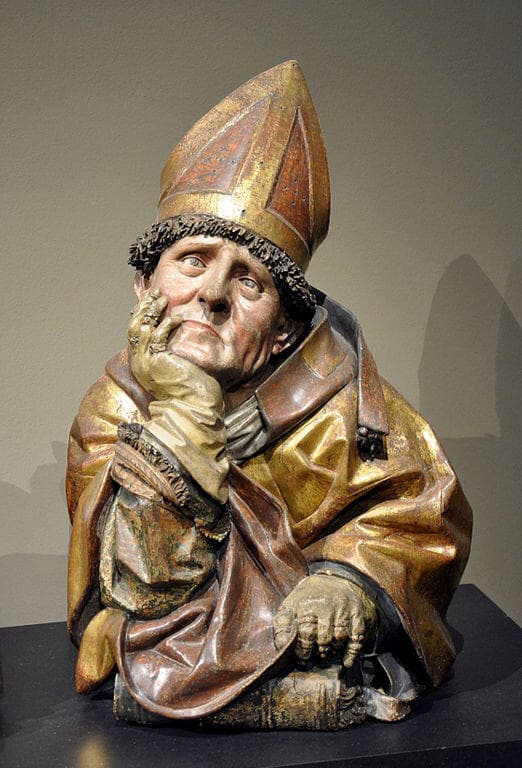
Augustine of Hippo
Catena Aurea · Matthäusevangelium 9
And he entered into a ship, and passed over, and came into his own city. And, behold, they brought to him a man sick of the palsy, lying on a bed: and Jesus seeing their faith said unto the sick of the palsy, Son, be of good cheer; thy sins be forgiven thee. And, behold, certain of the Scribes said within themselves, This man blasphemeth. And Jesus knowing their thoughts said, Wherefore think ye evil in your hearts? For whether is easier, to say, Thy sins be forgiven thee; or to say, Arise, and walk? But that ye may know that the Son of man hath power on earth to forgive sins, (then saith he to the sick of the palsy,) Arise, take up thy bed, and go unto thine house. And he arose, and departed to his house. But when the multitude saw it, they marvelled, and glorified God, which had given such power unto men.
(De Cons. Ev. ii. 25.) That Matthew here speaks of his own city, and Mark calls it Capharnaum, would be more difficult to be reconciled if Matthew had expressed it Nazareth. But as it is, all Galilee might be called Christ’s city, because Nazareth was in Galilee; just as all the Roman empire, divided into manystates, was still called the Roman city1. Who can doubt then that the Lord in coming to Galilee is rightly said to come into his own city, whatever was the town in which He abode, especially since Capharnaum was exalted into the metropolis of Galilee?