
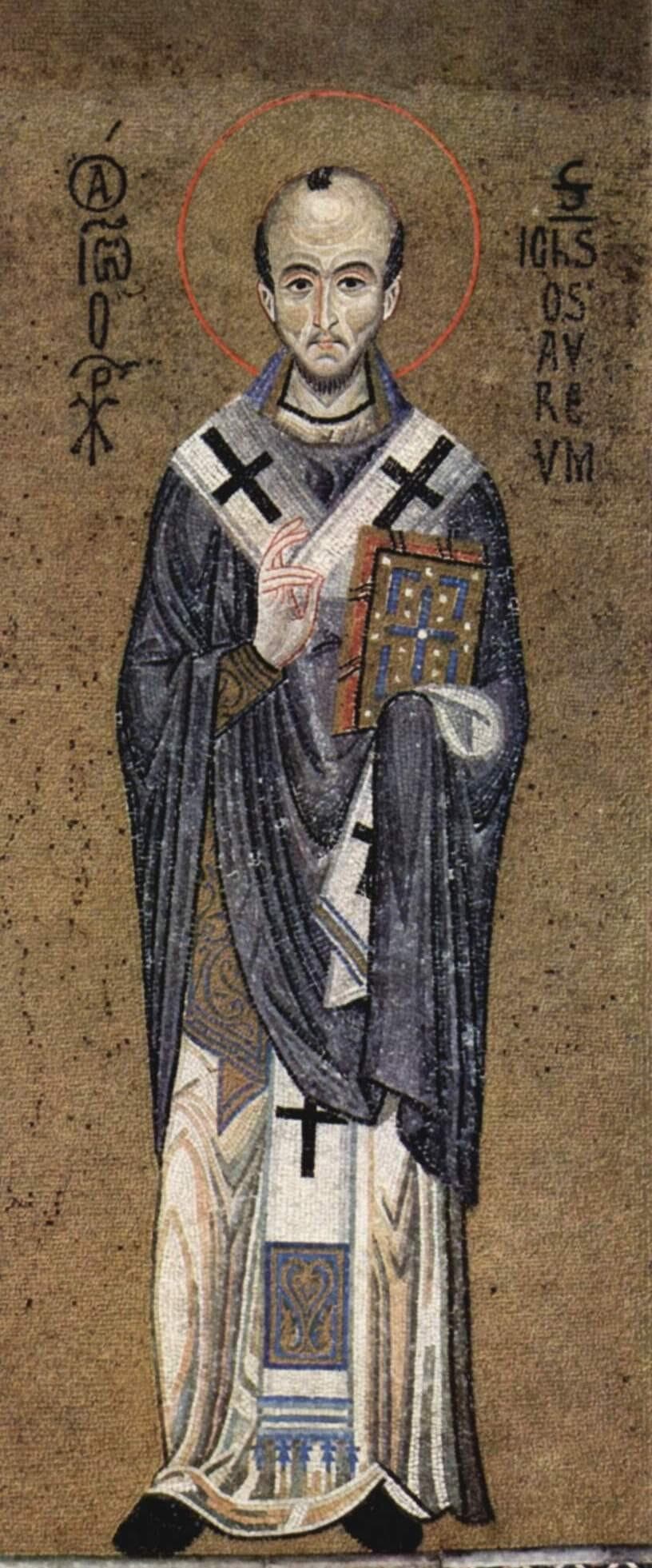
John Chrysostom
Catena Aurea · Matthäusevangelium 8
And when he was entered into a ship, his disciples followed him. And, behold, there arose a great tempest in the sea, insomuch that the ship was covered with the waves: but he was asleep. And his disciples came to him, and awoke him, saying, Lord, save us: we perish. And he saith unto them, Why are ye fearful, O ye of little faith? Then he arose, and rebuked the winds and the sea; and there was a great calm. But the men marvelled, saying, What manner of man is this, that even the winds and the sea obey him! PSEUDO-ORIGEN. (Hom. in div. vii.) Christ having performed many great and wonderful things on the land, passes to the sea, that there also He might shew forth His excellent power, presenting Himself before allmen as the Lord of both earth and sea. And when he was entered into a boat, his disciples followed him, not being weak but strong and established in the faith. Thus they followed Him not so much treading in His footsteps, as accompanying Him in holiness of spirit. PSEUDO-ORIGEN. (ubi sup.) Therefore, having entered into the boat He caused the sea to rise; And, lo, there arose a great tempest in the sea, so that the boat was covered by the waves. This tempest did not arise of itself, but in obedience to the power of Him Who gave commandment, who brings the winds out of his treasures. (Jer. 10:13.) There arose a great tempest, that a great work might be wrought; because by how much the more the waves rushed into the boat, so much the more were the disciples troubled, and sought to be delivered by the wonderful power of the Saviour.
They had seen others made partakers of Christ’s mercies, but forasmuch as no man has so strong a sense of those things that are done in the person of another as of what is done to himself, it behoved that in their own bodies they should feel Christ’s mercies. Therefore He willed that this tempest should arise, that in their deliverance they might have a more lively sense of His goodness. This tossing of the sea was a type of their future trials of which Paul speaks, I would not have you ignorant, brethren, how that we were troubled beyond our strength. (2 Cor. 1:8.) But that there might be time for their fear to arise, it follows, But he was asleep. For if the storm had arisen while He was awake, they would either not have feared, or not have prayed Him, or would not have believed that He had the power to still it.