
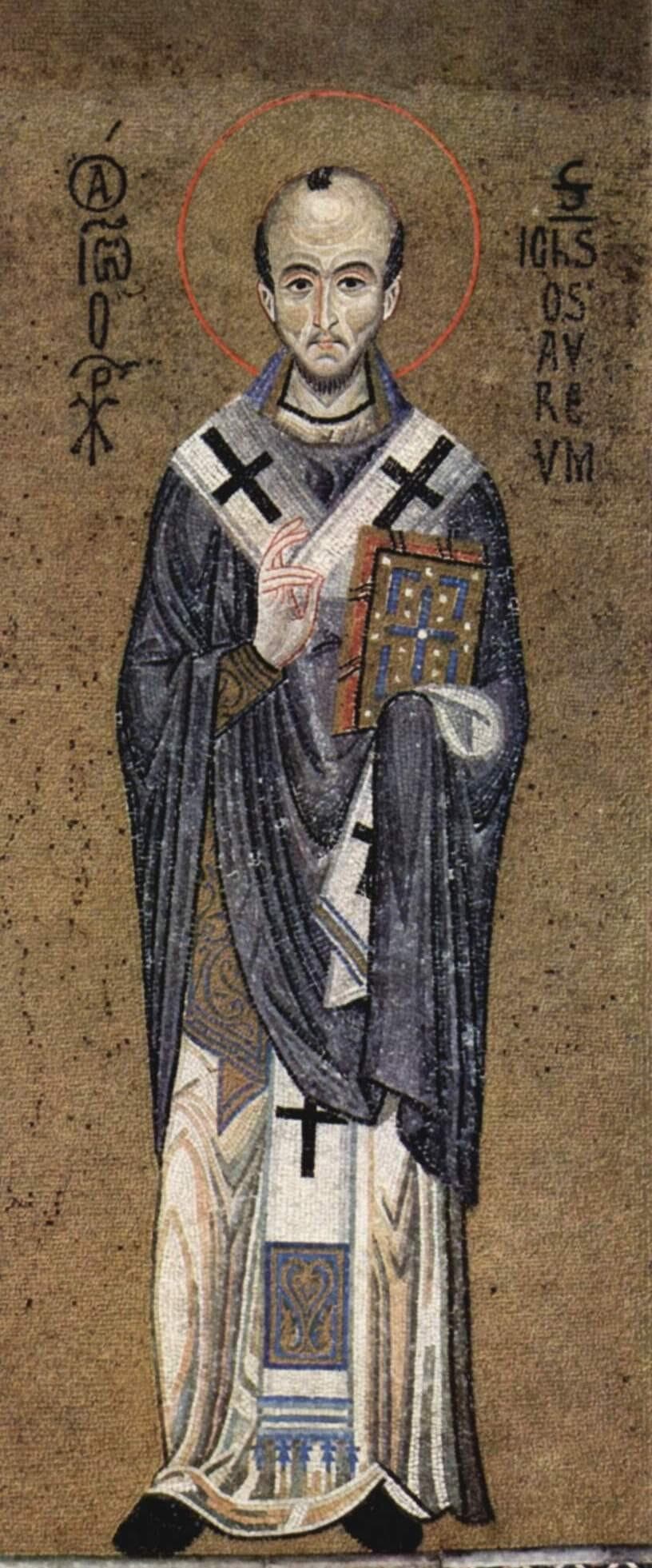
John Chrysostom
Catena Aurea · Matthäusevangelium 8
When he was come down from the mountain, great multitudes followed him. And, behold, there came a leper and worshipped him, saying, Lord, if thou wilt, thou canst make me clean. And Jesus put forth his hand, and touched him, saying, I will; be thou clean. And immediately his leprosy was cleansed. And Jesus said unto him, See thou tell no man; but go thy way, shew thyself to the Priest, and offer the gift that Moses commanded, for a testimony unto them. PSEUDO-ORIGEN. (Hom. in Liv. 5.) While the Lord taught on the mount, the disciples were with Him, for to them it was given to know the secret things of the heavenly doctrine; but now as He came down from the mount the crowds followed Him, who had been altogether unable to ascend into the mount. They that are bowed by the burden of sin cannot climb to the sublime mysteries. But when the Lord came down from the mount, that is, stooped to the infirmity, and helplessness of the rest, in pity to their imperfections, great multitudes followed Him, some for renown, most for His doctrine, some for cures, or having their wants administered to. PSEUDO-ORIGEN. (ubi sup.) He works the cures below, and does none in the mount; for there is a time for all things under heaven, a time for teaching, and a time for healing. On the mount He taught, He cured souls, He healed hearts; which being finished, as He came down from the heavenly heights to heal bodies, there came to Him a leper and made adoration to Him; before he made his suit, he began to adore, shewing his great reverence. PSEUDO-ORIGEN. (ubi sup.) Lord, by Thee all things were made, Thou therefore, if thou will, canst make me clean. Thy will is the work, and all works are subject to Thy will. Thou of old cleansedst Naaman the Syrian of his leprosy by the hand of Elisha, and now, if thou will, thou canst make me clean. PSEUDO-ORIGEN. (ubi sup.) Because he was not slow to believe, his cure is not delayed; he did not linger in his confession, Christ did not linger in His cure.
Jesus when healing his body bids him tell no man; Jesus saith unto him, See thou tell no man. Some say that He gave this command that they might not through malice distrust his cure. But this is said foolishly, for He did not so cure him as that his purity should be called in question; but He bids him tell no man, to teach that He does not love ostentation and glory. How is it then that to another to whom He had healed He gives command to go and tell it? What He taught in that was only that we should have a thankful heart; for He does not command that it should be published abroad, but that glory should be given to God. (Mark 5:19.) He teaches us then through this leper not to be desirous of empty honour; by the other, not to be ungrateful, but to refer all things to the praise of God.