
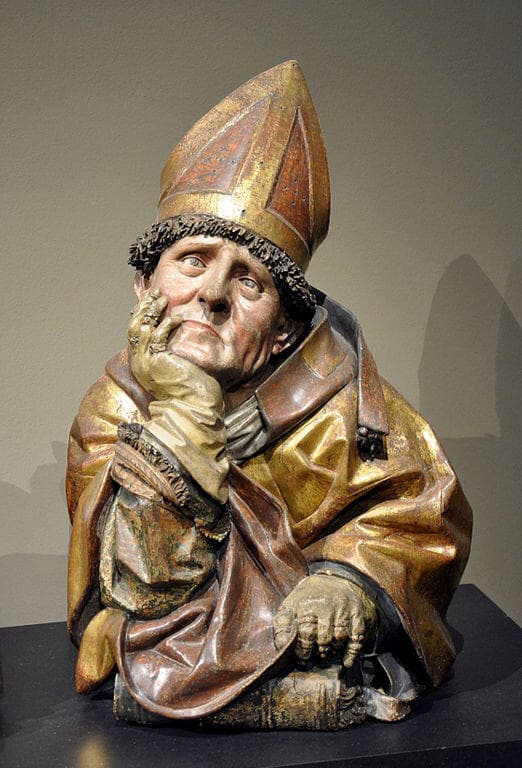
Augustine of Hippo
Catena Aurea · Matthäusevangelium 7
Beware of false prophets, which come to you in sheep’s clothing, but inwardly they are ravening wolves. Ye shall know them by their fruits. Do men gather grapes of thorns, or figs of thistles? Even so every good tree bringeth forth good fruit; but a corrupt tree bringeth forth evil fruit. A good tree cannot bring forth evil fruit, neither can a corrupt tree bring forth good fruit. Every tree that bringeth not forth good fruit is hewn down, and cast into the fire. Wherefore by their fruits ye shall know them.
(Serm. in Mont. ii. 25.) From this speech the Manichees suppose that neither can a soul that is evil be possibly changed for better, nor one that is good into worse. As though it had been, A good tree cannot become bad, nor a bad tree become good; whereas it is thus said, A good tree cannot bring forth evil fruit, nor the reverse. The tree is the soul, that is, the man himself; the fruit is the man’s works. An evil man therefore cannot work good works, nor a good man evil works. Therefore if an evil man would work good things, let him first become good. But as long as he continues evil, he cannot bring forth good fruits. Like as it is indeed possible that what was once snow, should cease to be so; but it cannot be that snow should be warm; so it is possible that he who has been evil should be so no longer; but it is impossible thatan evil man should do good. For though he may sometimes be useful, it is not he that does it, but it comes of Divine Providence superintending.