
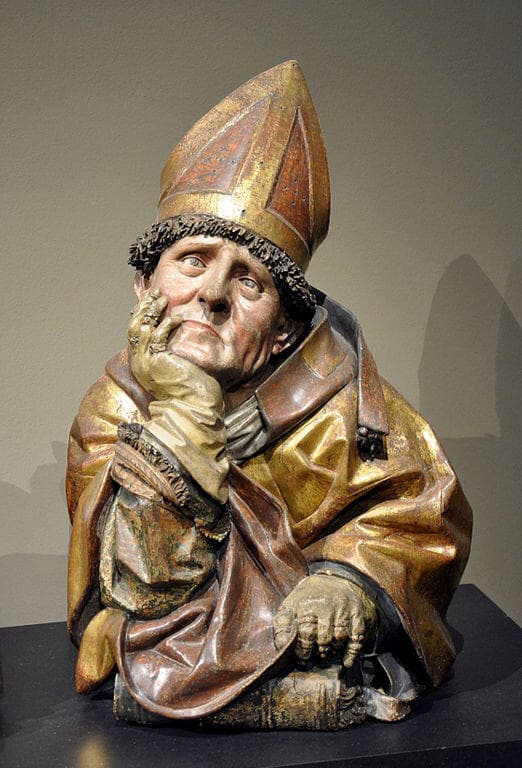
Augustine of Hippo
Catena Aurea · Matthäusevangelium 6
Take therefore no thought for the morrow: for the morrow shall take thought for the things of itself. Sufficient unto the day is the evil thereof.
(ubi sup.) Or otherwise; To-morrow is said only of time where future succeeds to past. When then we work any good work, we think not of earthly but of heavenly things. The morrow shall be anxious for itself, that is, Take food and the like, when you ought to take it, that is when necessity begins to call for it. For sufficient for the day is its own evil, that is, it is enough that necessity shall compel to take these things; He calls it evil, because it is penal, inasmuch as it pertains to our mortality, which we earned by sinning. To this necessity then of worldly punishment, add no further weight, that you may not only fulfil it, but may even so fulfil it as to shew yourself God’s soldier. But herein we must be careful, that, when we see any servant of God endeavouring to provide necessaries either for himself, or those committed to his care, we do not straight judge him to sin against this command of the Lord in being anxious for the morrow. For the Lord Himself, to whom Angels ministered, thought good to carry a bag for example sake. And in the Acts of the Apostles it is written, that food necessary for life was provided for future time, at a time when famine threatened. What the Lord condemns therefore, is not the provision of these things after the manner of men, but if a man because of these things does not fight as God’s soldier.