
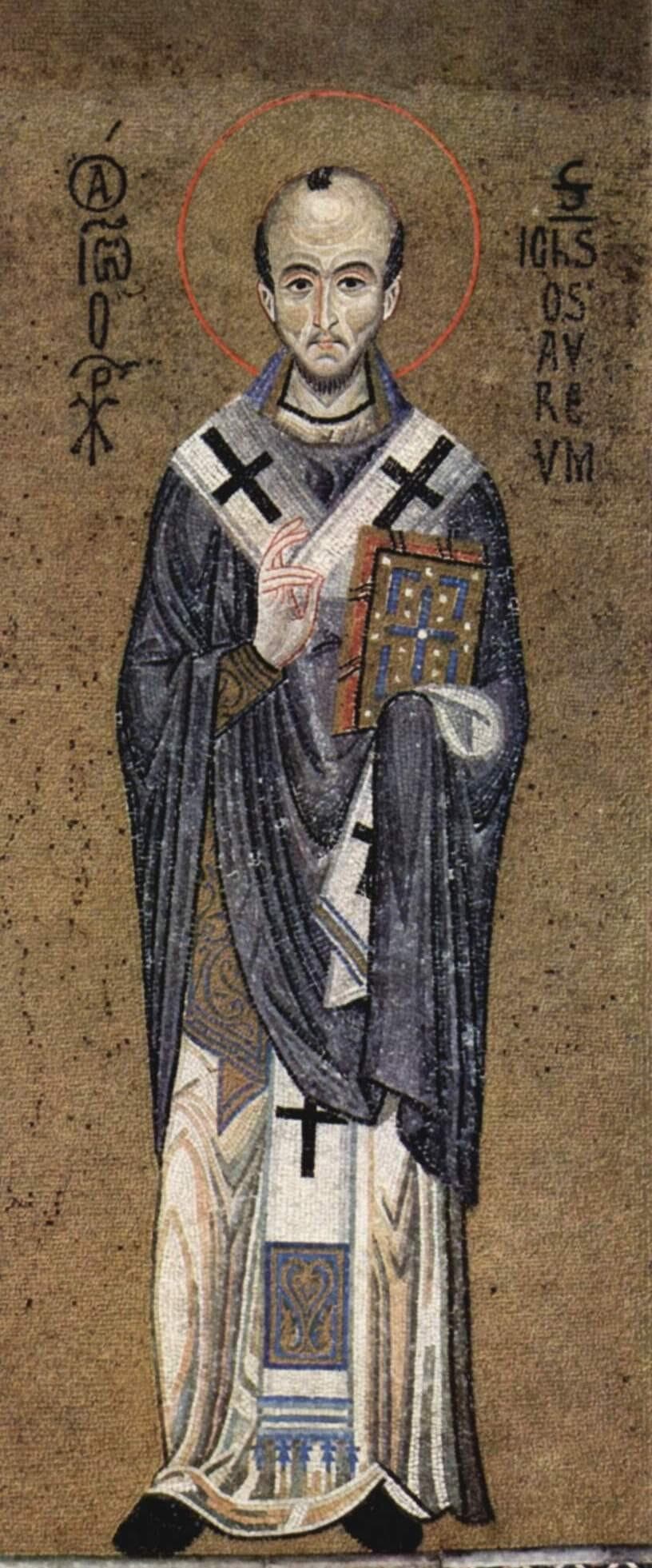
John Chrysostom
Catena Aurea · Matthäusevangelium 6
No man can serve two masters: for either he will hate the one, and love the other; or else he will hold to the one, and despise the other. Ye cannot serve God and mammon.
(Hom. xxi.) Or otherwise; in what had gone before He had restrained the tyranny of avarice by many and weighty motives, but He now adds yet more. Riches do not only harm us in that they arm robbers against us, and that they cloud our understanding, but they moreover turn us away from God’s service. This He proves from familiar notions, saying, No man can serve two masters; two, He means, whose orders are contrary; for concord makes one of many. This is proved by what follows, for either he will hate the one. He mentions two, that we may see that change for the better is easy. For if one were to give himself up in despair as having been made a slave to riches, namely, by loving them, he may hencelearn, that it is possible for him to change into a better service, namely, by not submitting to such slavery, but by despising it.