
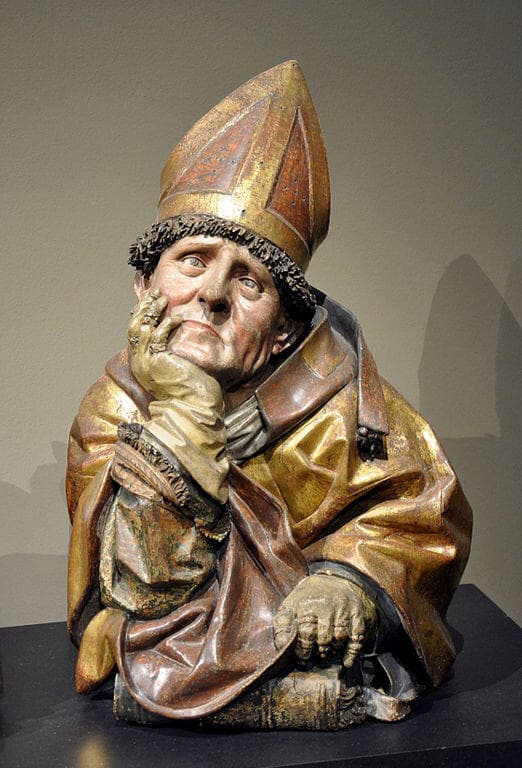
Augustine of Hippo
Catena Aurea · Matthäusevangelium 5
Ye have heard that it hath been said, Thou shalt love thy neighbour, and hate thine enemy. But I say unto you, Love your enemies, bless them that curse you, do good to them that hate you, and pray for them which despitefully use you and persecute you; That ye may be the children of your Father which is in heaven: for He maketh His sun to rise on the evil and on the good, and sendeth rain on the just and on the unjust. For if ye love them which love you, what reward have ye? do not even the Publicans the same? And if ye salute your brethren only, what do ye more than others? do not even the Publicans so? Be ye therefore perfect, even as your Father which is in heaven is perfect.
(cont. Faust. xix. 24.) I ask the Manichæans why they would have this peculiar to the Mosaic Law, that was said by them of old time, thou shall hate thy enemy? Has not Paul said of certain men that they were hateful to God? We must enquire then how we may understand that, after the example of God, to whom the Apostle here affirms some men to be hateful, our enemies are to be hated; and again after the same pattern of Him who maketh his sun to rise on the evil and the good, our enemies are to be loved. Here then is the rule by which we may at once hate our enemy for the evil’s sake that is in him, that is, his iniquity, and love him for the good’s sake that is in him, that is, his rational part. This then, thus uttered by them of old, being heard, but not understood, hurried men on to the hatred of man, when they should have hated nothing but vice. Such the Lord corrects as He proceeds, saying, I say unto you, Love your enemies. Lie who had just declared that He came not to subvert the Law, bat to fulfil it, by bidding us loveour enemies, brought us to the understanding of how we may at once hate the same man for his sins whom we love for his human nature.