
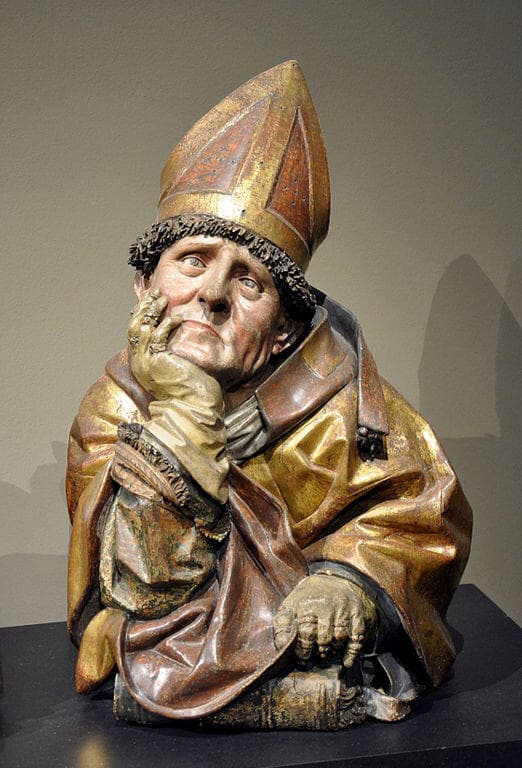
Augustine of Hippo
Catena Aurea · Matthäusevangelium 5
For I say unto you, That except your righteousness shall exceed the righteousness of the Scribes and Pharisees, ye shall in no case enter into the kingdom of heaven. Ye have heard that it was said by them of old time, Thou shalt not kill; and whosoever shall kill shall be in danger of the judgment: But I say unto you, That whosoever is angry with his brother without a cause shall be in danger of the judgment: and whosoever shall say to his brother, Raca, shall be in danger of the council: but whosoever shall say, Thou fool, shall be in danger of hell fire.
(De Civ. Dei, i. 20.) We do not, because we have heard that, Thou shall not kill, deem it therefore unlawful to pluck a twig, according to the error of the Manichees, nor consider it to extend to irrational brutes; by the most righteous ordinance of the Creator their life and death is subservient to our needs. There remains, therefore, only man of whom we can understand it, and that not any other man, nor you only; for he who kills himself does nothing else but kill a man. Yet have not they in any way done contrary to this commandment who have waged wars under God’s authority, or they who charged with the administration of civil power have by most just and reasonable orders inflicted death upon criminals. Also Abraham was not charged with cruelty, but even received the praise of piety, for that he was willing toobey God in slaying his son. Those are to be excepted from this command whom God commands to be put to death, either by a general law given, or by particular admonition at any special time. For he is not the slayer who ministers to the command, like a hilt to one smiting with a sword, nor is Samson otherwise to be acquitted for destroying himself along with his enemies, than because he was so instructed privily of the Holy Spirit, who through him wrought the miracles.