
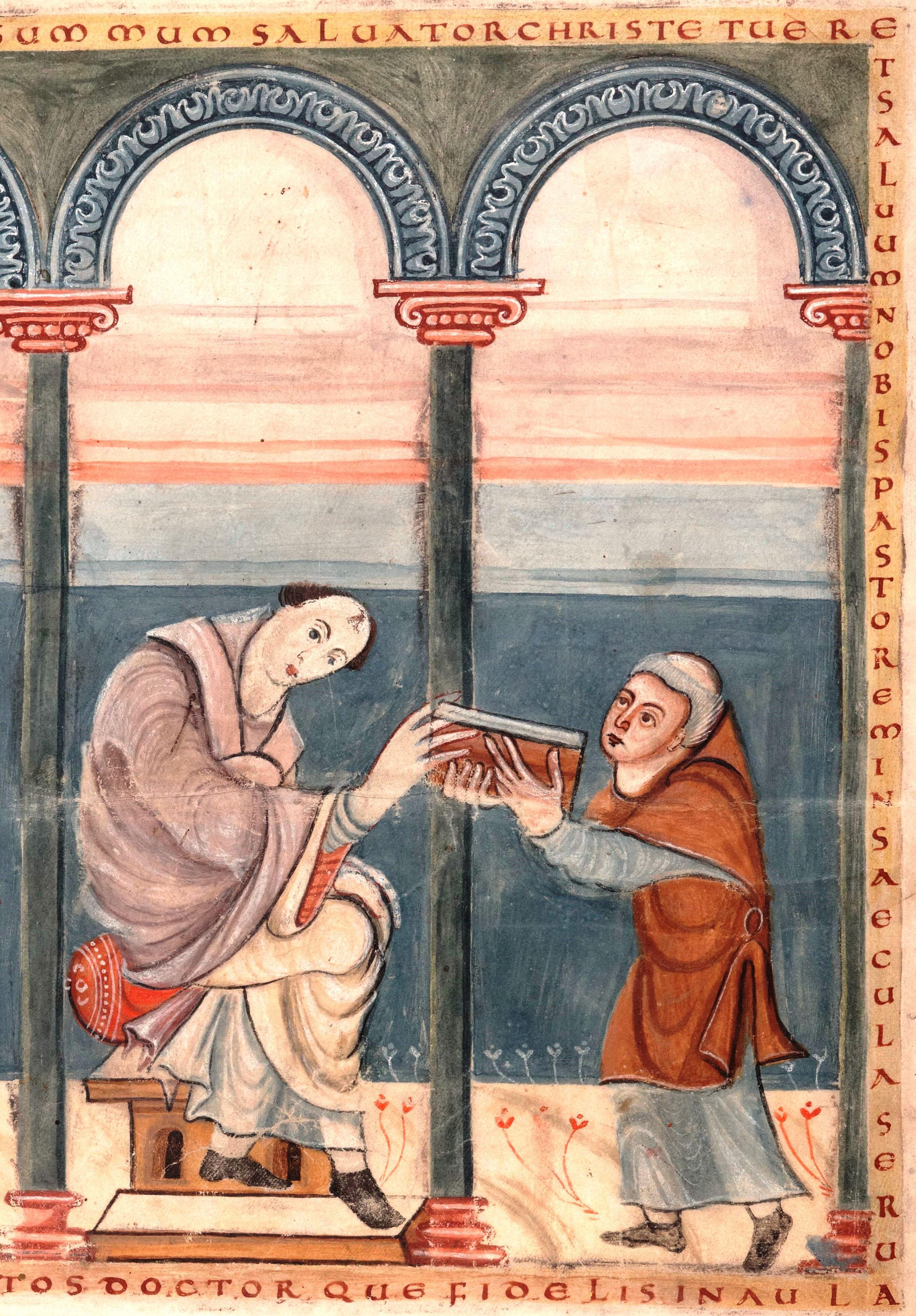
Rabanus Maurus
Catena Aurea · Matthäusevangelium 4
Now when Jesus had heard that John was cast into prison, He departed into Galilee; And leaving Nazareth, He came and dwelt in Capernaum, which is upon the sea coast, in the borders of Zabulon and Nephthalim: That it might be fulfilled which was spoken by Esaias the prophet, saying, The land of Zabulon, and the land of Nephthalim, by the way of the sea, beyond Jordan, Galilee of the Gentiles; The people which sat in darkness saw great light; and to them which sat in the region and shadow of death light is sprung up.
(ap. Anserm.) In allegory, John and the rest of the Prophets were the voice going before the Word. When prophecy ceased and was fettered, then came the Word, fulfilling what the Prophet had spoken of it, He departed into Galilee, i. e. from figure to verity. Or, into the Church, which is a passing from vice to virtue. Nazareth is interpreted ‘a flower,’ Capernaum, ‘the beautiful village;’ He left therefore the flower of figure, (in which was mystically intended the fruit of the Gospel,) and came into the Church, which was beautiful with Christ’s virtues. It is by the sea-coast, because placed near the waves of this world, it is daily beaten by the storms of persecution. It is situated between Zabulon and Naphtali, i. e. common to Jews and Gentiles. Zabulon is interpreted, ‘the abode of strength;’ because the Apostles, who were chosen from Judæa, were strong. Nephtali, ‘extension,’ because the Church of the Gentiles was extended through the world.