
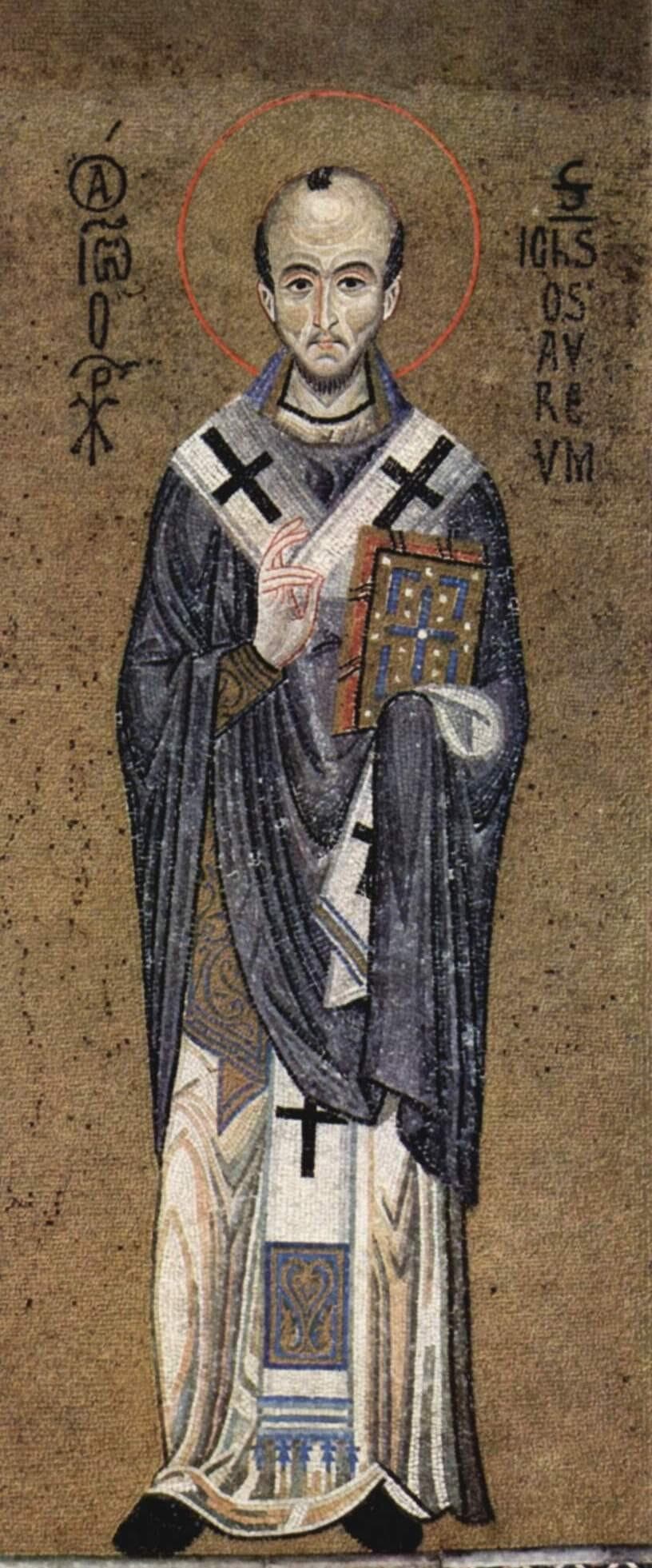
John Chrysostom
Catena Aurea · Matthäusevangelium 28
Now when they were going, behold, some of the watch came into the city, and shewed unto the Chief Priests all the things that were done. And when they were assembled with the elders, and had taken counsel, they gave large money unto the soldiers, Saying, Say ye, His disciples came by night, and stole him away while we slept. And if this come to the governor’s ears, we will persuade him, and secure you. So they took the money, and did as they were taught: and this saying is commonly reported among the Jews until this day.
How should the disciples carry Him away by stealth, men poor, and of no station, and who scarcely dared to shew themselves? They fled when afterwards they saw Christ alive, how, when He was dead, would they not have feared so great a multitude of soldiers? How were they to remove the door of the sepulchre? One might have done it unperceived by the guard. But a large stone was rolled to the mouth requiring many hands. And was not the seal thereon? And why did they not attempt it the first night, when there was none at the sepulchre? For it was on the Sabbath that they begged the body of Jesus. Moreover, what mean these napkins which Peter sees laid here? Had the disciples stolen the Body, they would never have stripped it, both because it might so receive hurt, and cause unnecessary delay to themselves, and so expose them to be taken by the watch; especially since the Body and clothes were covered with myrrh, a glutinous spice, which would cause them to adhere. The allegation of the theft then is improbable. So that their endeavours to conceal the Resurrection do but make it more manifest. For when they say, His disciples stole the body, they confess that it is not in the sepulchre. And as they thus confess that they had not the Body, and as the watch, the sealing, and the fears of the disciples, make the theft improbable, there is seen evidence of the Resurrection not to be gainsaid.