
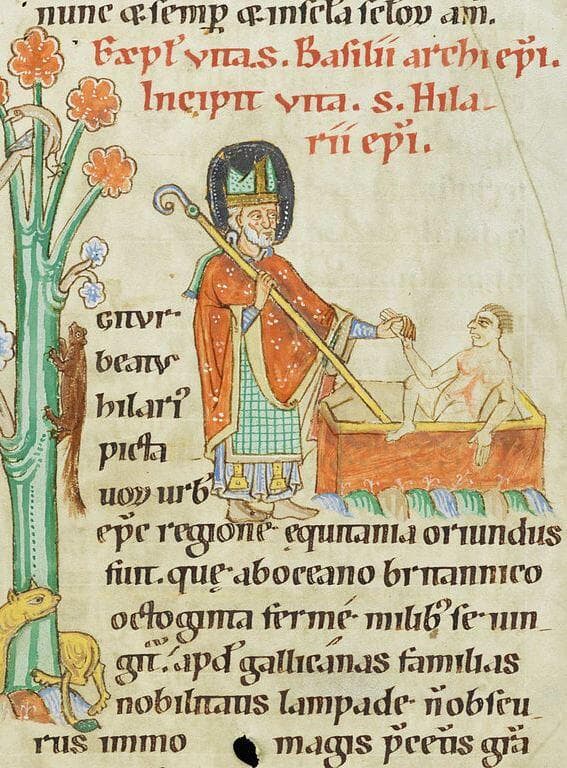
Hilary of Poitiers
Catena Aurea · Matthäusevangelium 26
Then cometh Jesus with them unto a place called Gethsemane, and saith unto the disciples, Sit ye here, while I go and pray yonder. And he took with him Peter and the two sons of Zebedee, and began to be sorrowful and very heavy. Then saith he unto them, My soul is exceeding sorrowful, even unto death: tarry ye here, and watch with me.
These words, He began to be sorrowful and very heavy, are interpreted by heretics that fear of death assailed the Son of God, being (as they allege) neither begotten from eternity, nor existing in the Father’s infinite substance, but produced out of nothing by Him who created all things; and that hence He was liable to anguish of grief, and fear of death. And He who can fear death can also die; and He who can die, though He shall exist after death, yet is not eternal through Him who begot Him in past time. Had these faith to receive the Gospels, they would know that the Word was in the beginning God, and from the beginning with God, and that the eternity of Him who begets and Him who is begotten is one and the same. But if the assumption of flesh infected with its natural infirmity the virtue of that incorruptible substance, so that it became subject to pain, and shrinking from death, it would also become thereby liable to corruption, and thus its immortality being changed into fear, that which is in it is capable of at sometime ceasing to be. But God ever is without measure of time, and such as He is, He continues to be eternally. Nothing then in God can die, nor can God have any fear springing out of Himself.