
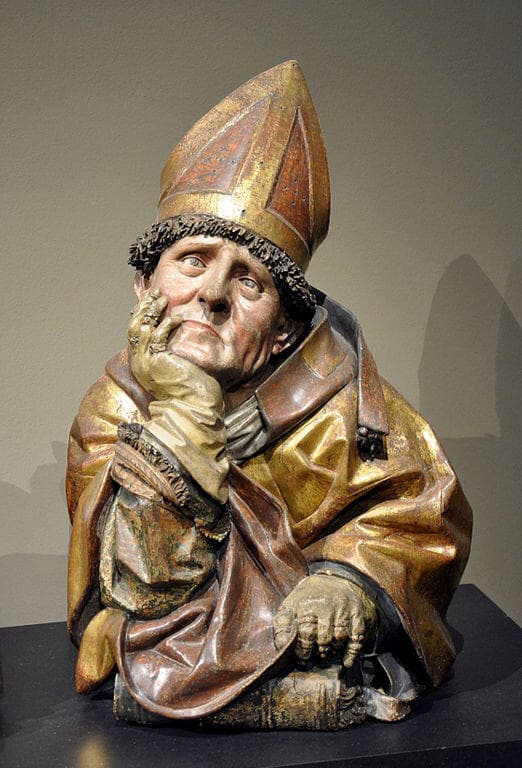
Augustine of Hippo
Catena Aurea · Matthäusevangelium 25
And these shall go away into everlasting punishment: but the righteous into life eternal.
(de Civ. Dei, xxi. 19, 20. &c.) So some there are who hold out liberation from punishment not to all men, but to those only who have been washed in Christ’s Baptism, and have been partakers of His Body, let them have lived as they will; because of that which the Lord speaks, If any man eat of this bread, he shall not die eternally. (John 6:51.) Again, others promise this not to all who have Christ’s sacrament, but to Catholics only, however ill their lives, who have eaten Christ’s Body, not in sacrament only, but in verity, (inasmuch as they are set in the Church, which is His Body,) even though they should afterwards have fallen into heresy or idolatry of the Gentiles. And others again, because of what is written above, He that shall endure to the end, the same shall be saved, (Matt. 24:13.) promise this only to those whopersevere in the Catholic Church, that by the worthiness of their foundation, that is, of their faith, they shall be saved by fire. All these the Apostle opposes when he says, The works of the flesh are manifest, which are these, uncleanness, fornication, and the like; of which I tell you before, that they which do such things shall not inherit the kingdom of God. (Gal. 5:19.) Whoever in his heart prefers temporal things to Christ, Christ is not his foundation, though he seem to have the faith of Christ. How much more then is he, who has committed things unlawful, convicted of not preferring Christ, but preferring other things to Him? I have also met with some who thought that only those would burn in eternal torments who neglected to give alms proportioned to their sins; and for this reason they think that the Judge Himself here mentions nothing else that He shall make enquiry of, but of the giving or not giving alms. But whoso gives alms worthily for his sins, first begins with himself; for it were unmeet that he should not do that to himself which he does to others when he has heard the words of God, Thou shalt love thy neighbour as thyself, (Matt. 22:39.) and hears likewise, Be merciful to thy soul in pleasing God? (Ecclus. 30:24.) He then who does not to his own soul this alms of pleasing God, how can he be said to give alms meet for his sins? Why we are to give alms then is only that when we pray for mercy for sins past, we may be heard; not that we may purchase thereby license for continuing in sin. And the Lord forewarns us that He will put alms done on the right hand, and on the left alms not done, to hew us how mighty are alms to do away former sins, not to give impunity to a continuance in sin.