
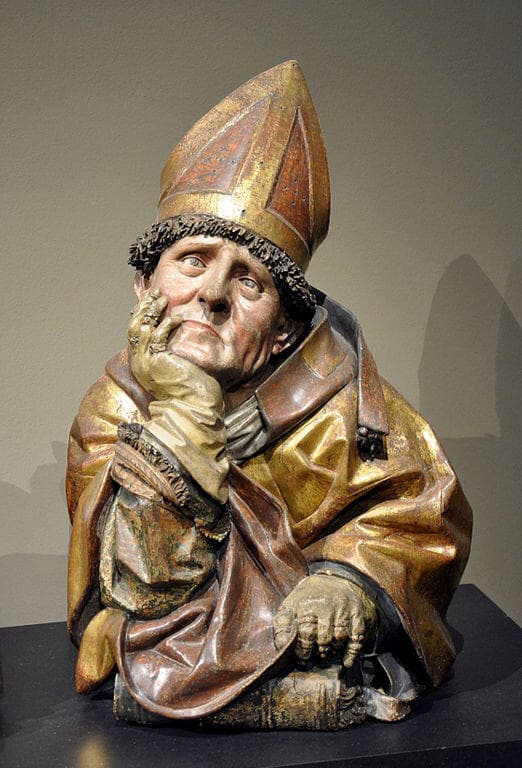
Augustine of Hippo
Catena Aurea · Matthäusevangelium 25
And these shall go away into everlasting punishment: but the righteous into life eternal.
(de Civ. Dei, xxi. 11.) And the justice of no law is concerned to provide that the duration of each man’s punishment should be the same with the sin which drew that punishment upon him. There never was any man, who held that the torment of him, who committed a murder or adultery, should be compressed within the same space of time as the commission of the act. And when for any enormous crime a man is punished with death, does the law estimate his punishment by the delay that takes place in putting him to death, and not rather by this, that they remove him for ever from the society of the living? And fines, disgrace, exile, slavery, when they are inflicted without any hopes of mercy, do they not seem like eternal punishments in proportion to the length of this life? They are only therefore not eternal, because the life which suffers them is not itself eternal. But they say, How then is that true which Christsays, With what measure ye mete, it shall be measured to you again, (Matt. 7:2.) if temporal sin is punished with eternal pain? They do not observe that this is said with a view, not to the equality of the period of time, but of the retribution of evil, i. e. that he that has done evil should suffer evil. Man was made worthy of everlasting evil, because he destroyed in himself that good which might have eternal.