
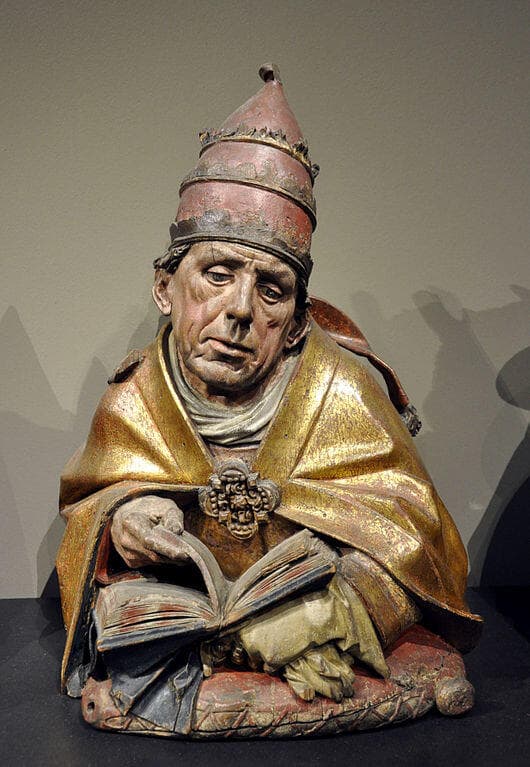
Gregory the Great
Catena Aurea · Matthäusevangelium 25
For the kingdom of heaven is as a man travelling into a far country, who called his own servants, and delivered unto them his goods. And unto one he gave rive talents, to another two, and to another one; to every man according to his several ability; and straightway took his journey. Then he that had received the five talents went and traded with the same, and made them other five talents. And likewise he that had received two, he also gained other two. But he that had received one went and digged in the earth, and hid his lord’s money. After a long time the lord of those servants cometh, and reckoneth with them. And so he that had received five talents came and brought other five talents, saying, Lord, thou deliveredst unto me five talents: behold, I have gained beside them five talents more. His lord said unto him, Well done, thou good and faithful servant: thou hast been faithful over a few things, I will make thee ruler over many things: enter thou into the joy of thy lord. He also that had received two talents came and said, Lord, thou deliveredst unto me two talents: behold, I have gained two other talents beside them. His lord said unto him, Well done, good and faithful servant; thou hast been faithful over a few things, I will make thee ruler over many things: enter thou into the joy of thy lord. Then he which had received the one talent came and said, Lord, I knew thee that thou art an hard man, reaping where thou hast not sown, and gathering where thou hast not strawed: And I was afraid, and went and hid thy talent in the earth: lo, there thou hast that is thine. His lord answered and said unto him, Thou wicked and slothful servant, thou knewest that I reap where I sowed not, and gather where I have not strawed: Thou oughtest therefore to have put my money to the exchangers, and then at my coming I should have received my own with usury. Take therefore the talent from him, and give it unto him which hath ten talents. For unto every one that hath shall be given, and he shall have abundance: but from him that hath not shall be taken away even that which he hath. And cast ye the unprofitable servant into outer darkness: there shall be weeping and gnashing of teeth.
(Hom. in Ev. ix. 5.) It might seem more seasonable to have given it rather to him who had two, than to him who had five. But as the five talents denote the knowledge of things without, the two understanding and action, he who had the two had more than he who had the five talents; this man with his five talents merited the administration of things without, but was yet without any understanding of things eternal. The one talent therefore, which we say signifies the intellect, ought to be given to him who had administered well the things without which he had received; the same we see happen every day in the Holy Church, that they who administer faithfully things without, are also mighty in the in ward understanding.