
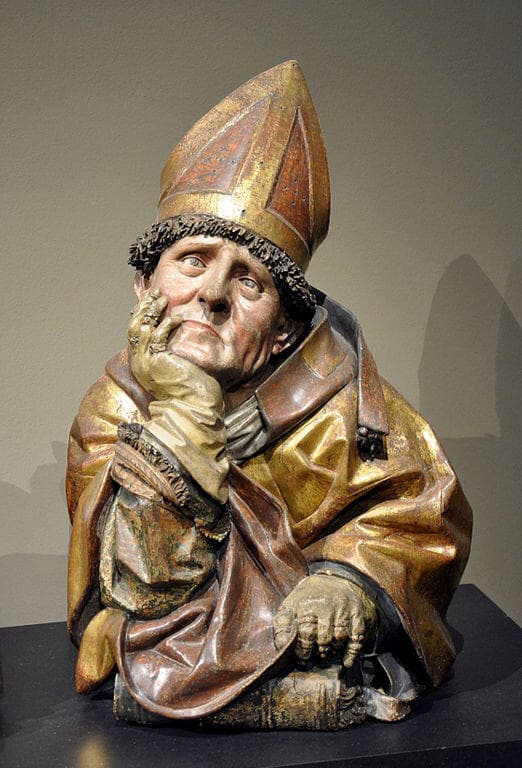
Augustine of Hippo
Catena Aurea · Matthäusevangelium 24
Who then is a faithful and wise servant, whom his lord hath made ruler over his houshold, to give them meat in due season? Blessed is that servant, whom his lord when he cometh shall find so doing. Verily I say unto you, That he shall make him ruler over all his goods. But and if that evil servant shall say in his heart, My lord delayeth his coming; And shall begin to smite his fellowservants, and to eat and drink with the drunken; The lord of that servant shall come in a day when he looketh not for him, and in an hour that he is not aware of, And shall cut him asunder, and appoint him his portion with the hypocrites: there shall be weeping and gnashing of teeth.
(Ep. 199 in fin.) Putting aside this wicked servant, who, there is no doubt, hates his Master’s coming, let us set before our eyes these good servants, who anxiously expect their Lord’s coming. One looks for His coming sooner, another later, the third confesses his ignorance of the matter. Let us see which is most agreeable to the Gospel. One says, Let us watch and pray, because the Lord will quickly come; another, Let us watch and pray, because this life is short and uncertain, though the Lord’s coming may be distant; and the third, Let us watch, because this life is short and uncertain, and we know not the time when the Lord will come. What else does this man say than what we hear the Gospel say, Watch, because ye know not the hour in which the Lord shall come? All indeed, through longing for the kingdom, desire that that should be true which the first thinks, and if it should so come to pass, the second and third would rejoice with him; but if it should not come to pass, it were to be feared that the belief of its supporters might be shaken by the delay, and they might begin to think that the Lord’s coming shall be, not remote, but never. He who believes with the second that the Lord’s coming is distant will not be shaken in faith, but will receive an unlooked for joy. He who confesses his ignorance which of these is true, wishes for the one, is resigned to the other, but errs in neither, because he neither affirms or denies either.