
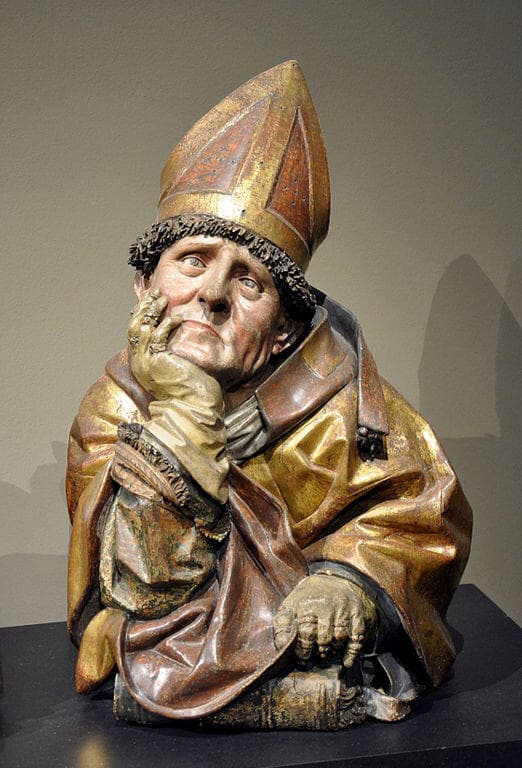
Augustine of Hippo
Catena Aurea · Matthäusevangelium 21
Hear another parable: There was a certain housholder, which planted a vineyard, aud hedged it round about, and digged a winepress in it, and built a tower, and let it out to husbandmen, and went into a far country: And when the time of the fruit drew near, he sent his servants to the husbandmen, that they might receive the fruits of it. And the husbandmen took his servants, and beat one, and killed another, and stoned another. Again, he sent other servants more than the first: and they did unto them likewise. But last of all he sent unto them his son, saying, They will reverence my son. But when the husbandmen saw the son, they said among themselves, This is the heir; come, let us kill him, and let us seize on his inheritance. And they caught him, and cast him out of the vineyard, and slew him. When the lord therefore of the vineyard cometh, what will he do unto those husbandmen? They say unto him, He will miserably destroy those wicked men, and will let out his vineyard unto other husbandmen, which shall render him the fruits in their seasons. Jesus saith unto them, Did ye never read in the Scriptures, The stone which the builders rejected, the same is become the head of the corner: this is the Lord’s doing, and it is marvellous in our eyes? Therefore say I unto you, The kingdom of God shall be taken from you. and given to a nation bringing forth the fruits thereof. And whosoever shall fall on this stone shall be broken: but on whomsoever it shall fall, it will grind him to powder.
(ubi sup.) This troubles us more, how it is that Luke not only does not relate this to have been their answer, but attributes to them a contrary answer. His words are, And when they heard it they said, God forbid. (Luke 20:16.) The only way that remains for understanding this is, therefore, that of the listening multitudes some answered as Matthew relates, and some as Luke. And let it perplex no one that Matthew says that the Chief Priests and elders of the people came to the Lord, and that he connects the whole of this discourse in one down to this parable of the vineyard, without interposing any other speaker. For it may be supposed that He spoke all these things with the Chief Priests, but that Matthew for brevity’s sake omitted what Luke mentions, namely, that this parable was spoken not to those only who asked Him concerning His authority, but to the populace, among whom were some who said, He shall destroy them, and give the vineyard to others. And at the same time this saying is rightly thought to have been the Lord’s, either for its truth, or for the unity of His members with their head. And there were also those who said, God forbid, those namely, who perceived that He spoke this parable against them.