
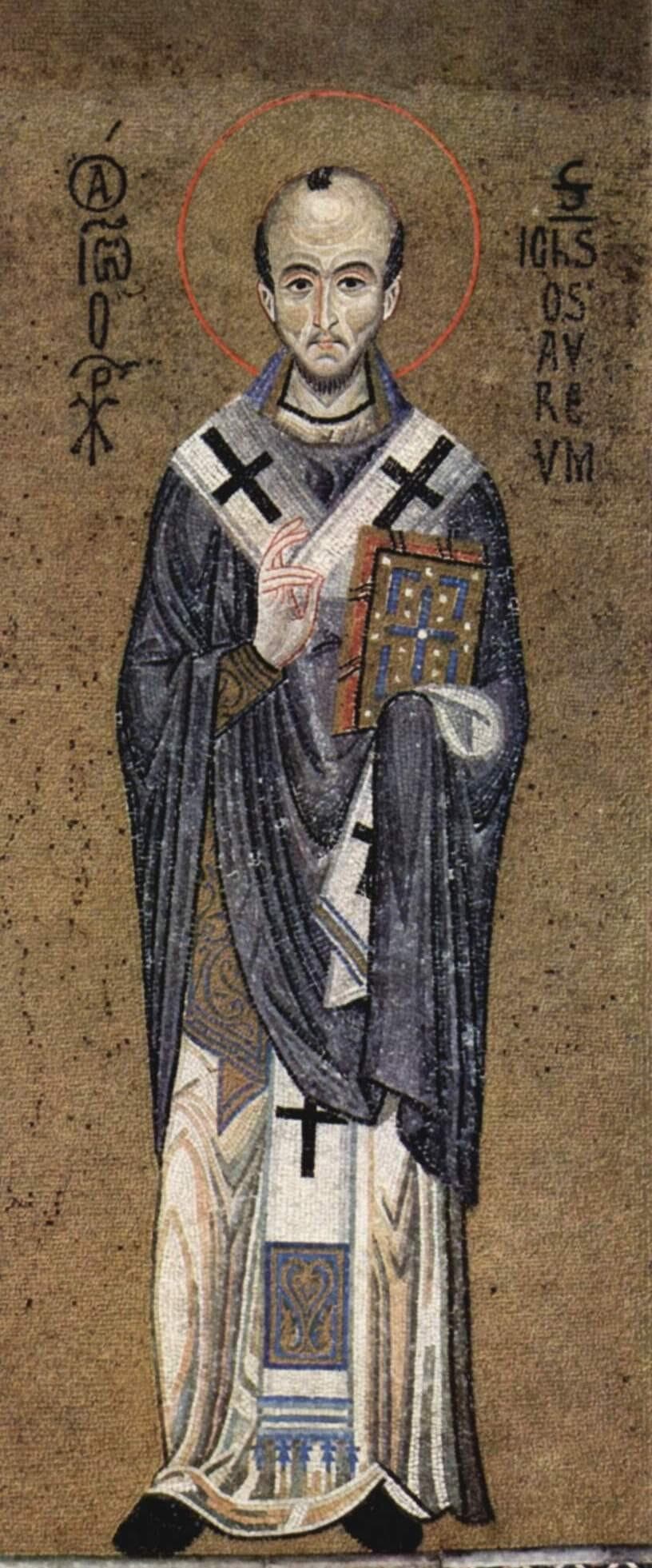
John Chrysostom
Catena Aurea · Matthäusevangelium 2
When Herod the king had heard these things, he was troubled, and all Jerusalem with him. And when he had gathered all the Chief Priests and Scribes of the people together, he demanded of them where Christ should be born. And they said unto him, In Bethlehem of Judæa: for thus it is written by the prophet, And thou Bethlehem, in the land of Juda, art not the least among the princes of Juda: for out of thee shall come a Governor, that shall rule my people Israel.
Observe the exactness of the prophecy; it is not He shall be in Bethlehem, but shall come out of Bethlehem; shewing that He should be only born there. What reason is there for applying this toZorobabel, as some do? For his goings forth were not from everlasting; nor did he go forth from Bethlehem, but was born in Babylonia. The expression, art not the least, is a further proof, for none but Christ could make the town where He was born illustrious. And after that birth, there came men from the utmost ends of the earth to see the stable and manger. He calls Him not ‘the Son of God,’ but (he Ruler who shall govern My people Israel; for thus He ought to condescend at the first, that they should not be scandalized, but should preach such things as more pertained to salvation, that they might be gained. Who shall rule My people Israel, is said mystically, for those of the Jews who believed; for if Christ ruled not all the Jews, theirs is the blame. Meanwhile he is silent respecting the Gentiles, that the Jews might not be scandalized. Mark this wonderful ordinance; Jews and Magi mutually instruct each other; the Jews learn of the Magi that a star had proclaimed Christ in the east, the Magi from the Jews that the Prophets had spoken of Him of old. Thus confirmed by a twofold testimony, they would look with more ardent faith for One whom the brightness of the star and the voice of the Prophets equally proclaimed.