
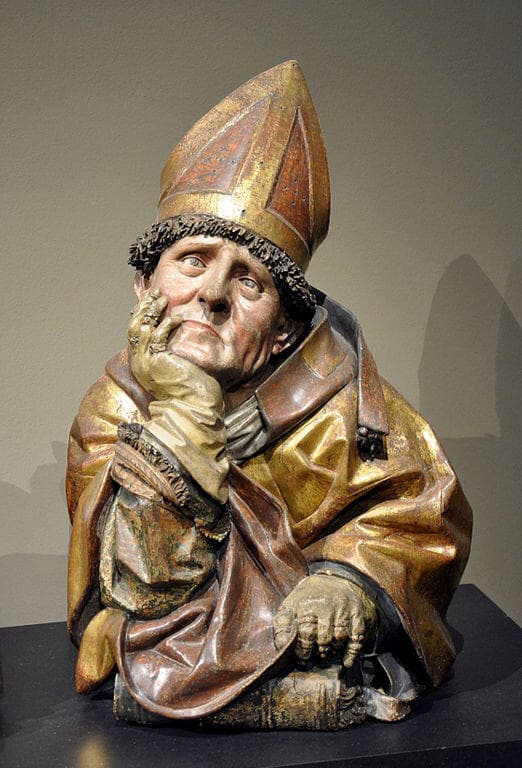
Augustine of Hippo
Catena Aurea · Matthäusevangelium 2
Now when Jesus was born in Bethlehem of Judæa in the days of Herod the king, behold, there came wise men from the east to Jerusalem, Saying, Where is He that is born King of the Jews? for we have seen His star in the east, and are come to worship Him.
(de Civ. Dei, v. 6.) It cannot be said to be utterly absurd to suppose that sidereal afflatus should influence the state of the body, when we see that it is by the approach and departure of the sun that the seasons of the year are varied, and that many things, as shells and the wonderful tides of the Ocean, increase or decrease as the moon waxes or wanes. But not so, to say that the dispositions of the mind are subject to sidereal impulse. Do they say that the stars rather foreshew than effect these results? how then do they explain, that in the life of twins, in their actions, their successes, professions, honours, and all other circumstances of life, there will often be so great diversity, that men of different countries are often more alike in their lives than twins, between whose birth there was only a moment’s, and between whose conception in the womb there was not a moment’s, interval. And the small interval between their births is not enough to account for the great difference between their fates. Some give the name of fate not only to the constitution of the stars, but to all series of causes, at the same time subjecting all to the will and power of God. This sort of subjection of human affairs and fate is a confusion of language which should be corrected, for fate is strictly the constitution of the stars. The will of God we do not call ‘fate,’ unless indeed we will derive the word from ‘speaking;’ as in the Psalms, God hath spoken once, twice have I heard the same. (Ps. 62:11.) There is then no need of much contention about what is merely a verbal controversy.