
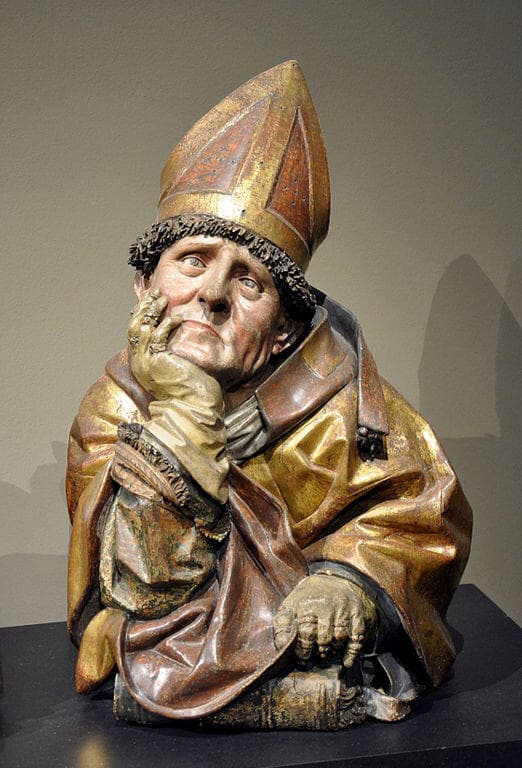
Augustine of Hippo
Catena Aurea · Matthäusevangelium 13
Another parable put he forth unto them, saying, The kingdom of heaven is likened unto a man which sowed good seed in his field: But while men slept, his enemy came and sowed tares among the wheat, and went his way. But when the blade was sprung up, and brought forth fruit, then appeared the tares also. So the servants of the householder came and said unto him, Sir, didst not thou sow good seed in thy field; from whence then hath it tares? He said unto them, An enemy hath done this. The servants said unto him, Wilt thou then that we go and gather them up? But he said, Nay; lest while ye gather up the tares, ye root up also the wheat with them. Let both grow together until the harvest: and in the time of harvest I will say to the reapers, Gather ye together first the tares, and bind them in bundles to burn them: but gather the wheat into my barn.
(Quæst. in Matt. q. 12.) It may be asked why He commands more than one bundle or heap of tares to be formed? Perhaps because of the variety of heretics differing not only from the wheat, but also among themselves, each several heresy, separated from communion with all the others, is designated as a bundle; and perhaps they may even then begin to be bound together for burning, when they first sever themselves from the Catholic communion, and begin to have their independent church, so that it is the burning and not the binding into bundles that will take place at the end of the world. But were this so, there would not be so many who would become wise again, and return from error into the Catholic Church. Wherefore we must understand the binding into bundles to be what shall come to pass in the end, that punishment should fall on them not promiscuously, but in due proportion to the obstinacy and wilfulness of each separate error.