
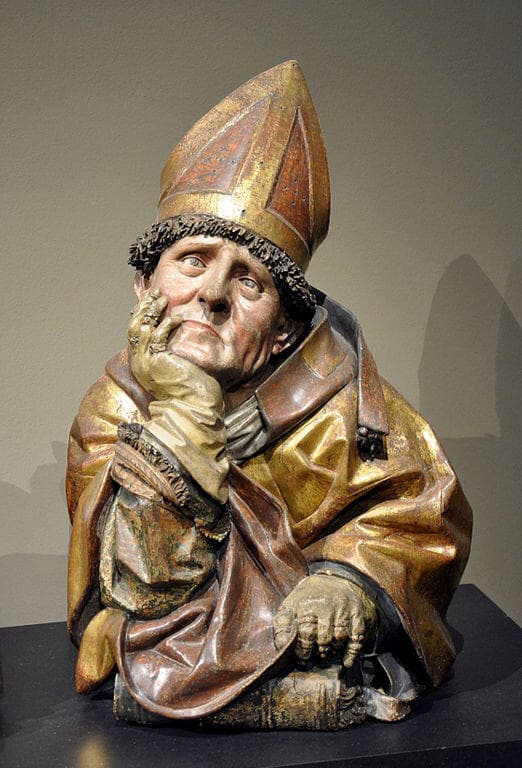
Augustine of Hippo
Catena Aurea · Matthäusevangelium 13
Another parable put he forth unto them, saying, The kingdom of heaven is likened unto a man which sowed good seed in his field: But while men slept, his enemy came and sowed tares among the wheat, and went his way. But when the blade was sprung up, and brought forth fruit, then appeared the tares also. So the servants of the householder came and said unto him, Sir, didst not thou sow good seed in thy field; from whence then hath it tares? He said unto them, An enemy hath done this. The servants said unto him, Wilt thou then that we go and gather them up? But he said, Nay; lest while ye gather up the tares, ye root up also the wheat with them. Let both grow together until the harvest: and in the time of harvest I will say to the reapers, Gather ye together first the tares, and bind them in bundles to burn them: but gather the wheat into my barn.
(Ep. 185. 32 et 22.) But who is there of you who has any wish that a heretic should perish, nay, that he should so much as lose aught? Yet could the house of David have had peace in no other way, but bythe death of Absalom in that war which he waged against his father; notwithstanding his father gave strict commands to his servants that they should save him alive and unhurt, that on his repentance there might be room for fatherly affection to pardon; what then remained for him but to mourn over him when lost, and to console his domestic affliction by the peace which it had brought to his kingdom. Thus our Catholic mother the Church, when by the loss of a few she gains many, soothes the sorrow of her motherly heart, healing it by the deliverance of so much people. Where then is that which those are accustomed to cry out, That it is free to all to believe? Whom hath Christ done violence to? Whom hath He compelled? Let them take the Apostle Paul; let them acknowledge in him Christ first compelling and afterwards teaching, first smiting and afterwards comforting. And it is wonderful to see him who entered into the Gospel by the force of a bodily infliction labouring therein more than all those who are called by word only. (1 Cor. 15:10.) Why then should not the Church constrain her lost sons to return to her, when her lost sons constrained others to perish?