
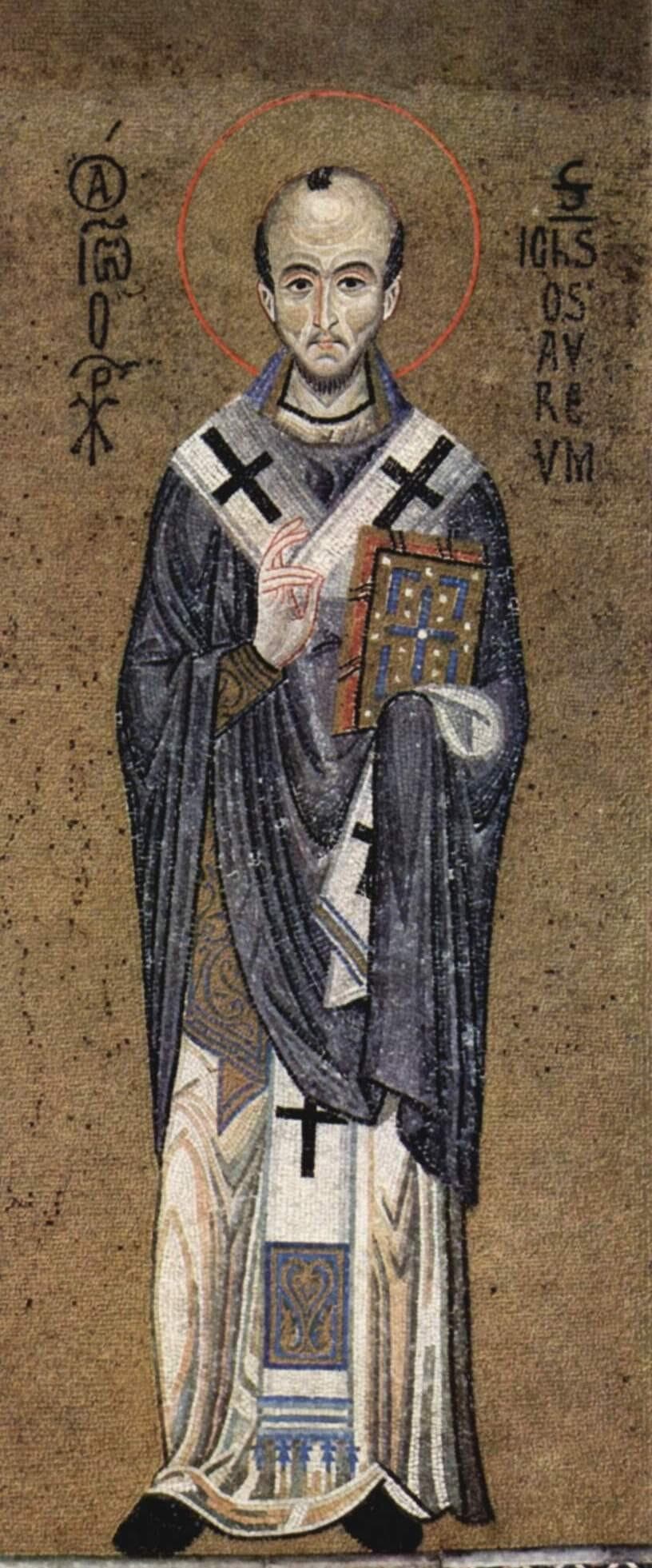
John Chrysostom
Catena Aurea · Matthäusevangelium 13
Another parable put he forth unto them, saying, The kingdom of heaven is likened unto a man which sowed good seed in his field: But while men slept, his enemy came and sowed tares among the wheat, and went his way. But when the blade was sprung up, and brought forth fruit, then appeared the tares also. So the servants of the householder came and said unto him, Sir, didst not thou sow good seed in thy field; from whence then hath it tares? He said unto them, An enemy hath done this. The servants said unto him, Wilt thou then that we go and gather them up? But he said, Nay; lest while ye gather up the tares, ye root up also the wheat with them. Let both grow together until the harvest: and in the time of harvest I will say to the reapers, Gather ye together first the tares, and bind them in bundles to burn them: but gather the wheat into my barn.
He then points out the manner of the Devil’s snares, saying, While men slept, his enemy came and sowed tares in the midst of the wheat, and departed. He here shews that error arose after truth, as indeed the course of events testifies; for the false prophets came after the Prophets, the false apostles after the Apostles, and Antichrist after Christ. For unless the Devil sees somewhat to imitate, and some to lay in wait against, he does not attempt any thing. Therefore because he saw that this man bears fruit an hundred, this sixty, and this thirty-fold, and that he was not able to carry off or to choke that which had. taken root, he turns to other insidious practices, mixing up his own seed, which is a counterfeit of the true, and thereby imposes upon such as are prone to be deceived. So the parable speaks, not of another seed,but of tares which bear a great likeness to wheat com. Further, the malignity of the Devil is shewn in this, that he sowed when all else was completed, that he might do the greater hurt to the husbandman.