
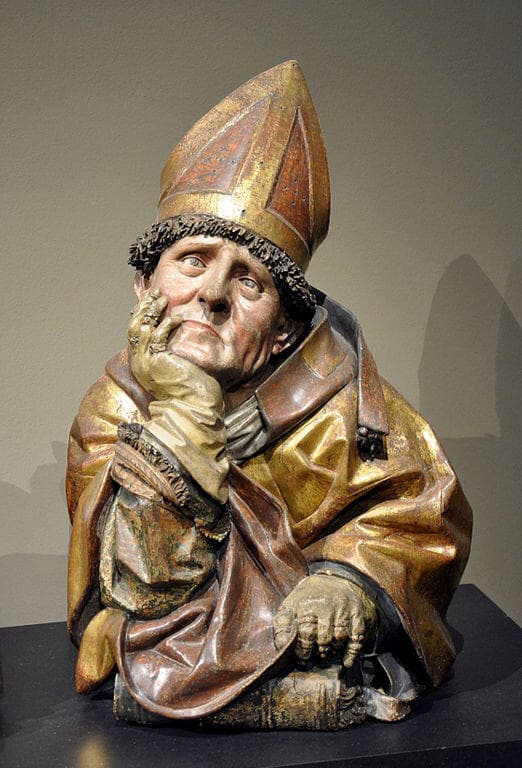
Augustine of Hippo
Catena Aurea · Matthäusevangelium 13
And the disciples came, and said unto him, Why speakest thou unto them in parables? He answered and said unto them, Because it is given unto you to know the mysteries of the kingdom of heaven, but to them it is not given. For whosoever hath, to him shall be given, and he shall have more abundance: but whosoever hath not, from him shall be taken away even that he hath. Therefore speak I to them in parables: because they seeing see not; and hearing they hear not, neither do they understand. And in them is fulfilled the prophecy of Esaias, which saith, By hearing ye shall hear, and shall not understand; and seeing ye shall see, and shall not perceive: For this people’s heart is waxed gross, and their ears are dull of hearing, and their eyes they have closed: lest at any time they should see with their eyes, and hear with their ears, and should understand with their heart, and should be converted, and I should heal them. But blessed are your eyes, for they see: and your ears, for they hear. For verily I say unto you, That many prophets and righteous men have desired to see those things which ye see, and have not seen them; and to hear those things which ye hear, and have not heard them.
(Quæst. in Matt. q. 14.) Otherwise; They have shut their eyes lest they should see with their eyes, that is, themselves were the cause that God shut their eyes. For another Evangelist says, We hath blinded their eyes. But is this to the end that they should never see? Or that they should not see so much as this, that becoming discontent with their own blindness and bewailing themselves, should so be humbled, and moved to confession of their sins and pious seeking after God. For Mark thus expresses the same thing, Lest they should be converted, and their sins should be forgiven them. From which we learn, that by their sins they deserved not to understand; and that yet this was allowed them in mercy that they should confess their sins, and should turn, and so merit to be forgiven. But when John relating this expresses it thus, Therefore they could not believe because Esaias said again, He hath blinded their eyes and hardened their heart, that they should not see with their eyes, and understand with their heart, and be converted, and I should heal them, (John 12:39) this seems to be opposed to this interpretation, and tocompel us to take what is here said, Lest they should see with their eyes, not as though they might come to see after this fashion, but that they should never see at all; for he says it plainly, That they should not see with their eyes. And that he says, Therefore they could not believe, sufficiently shows that the blindness was not inflicted, to the end that moved thereby, and grieving that they understood not, they should be converted through penitence; for that they could not, unless they had first believed, and by believing had been converted, and by conversion had been healed, and having been healed understood; but it rather shews that they were therefore blinded that they should not believe. For he speaks most clearly, Therefore they could not believe. But if it be so, who would not rise up in defence of the Jews, and pronounce them to be free from all blame for their unbelief? For, Therefore they could not believe, because he hath blinded their eyes. But because we must rather believe God to be without fault, we are driven to confess that by some other sins they had thus deserved to be blinded, and that indeed this blinding prevented them from believing; for the words of John are these, They could not believe, because that Esaias said again, He hath blinded their eyes. It is in vain then to endeavour to understand it that they were therefore blinded that they should be converted; seeing they could not be converted because they believed not; and they could not believe because they were blinded. Or perhaps we should not say amiss thus—that some of the Jews were capable of being healed, but that being puffed up with so great swelling pride, it was good for them at first that they should not believe, that they might understand the Lord speaking in parables, which if they did not understand they would not believe; and thus not believing on Him, they together with the rest who were past hope crucified Him; and at length after His resurrection, they were converted, when humbled by the guilt of His death they loved Him the more because of the heavy guilt which had been forgiven them; for their so great pride needed such an humiliation to overcome it. This might indeed be thought an inconsistent explanation, did we not plainly read in the Acts of the Apostles that thus it was. This then that John says, Therefore they could not believe, because he hath blinded their eyes that they should not see, (Acts 2:37) is not repugnant to our holding that they were therefore blinded that they should be converted; that is to say, that the Lord’s meaning was therefore purposely clothed in the obscurities of parables, that after His resurrection they might turn them to wisdom with a more healthy penitence. For by reason of the darkness of His discourse, they being blinded did not understand the Lord’s sayings, and not understanding them, they did not believe on Him, and not believing on Him they crucified Him; thus after His resurrection, terrified by the miracles that were wrought in His name, they had the greater compunction for their great sin, and were more prostrated in penitence; and accordingly after indulgence granted they turned to obedience with a more ardent affection. Notwithstanding, some there were to whom this blinding profited not to conversion.