
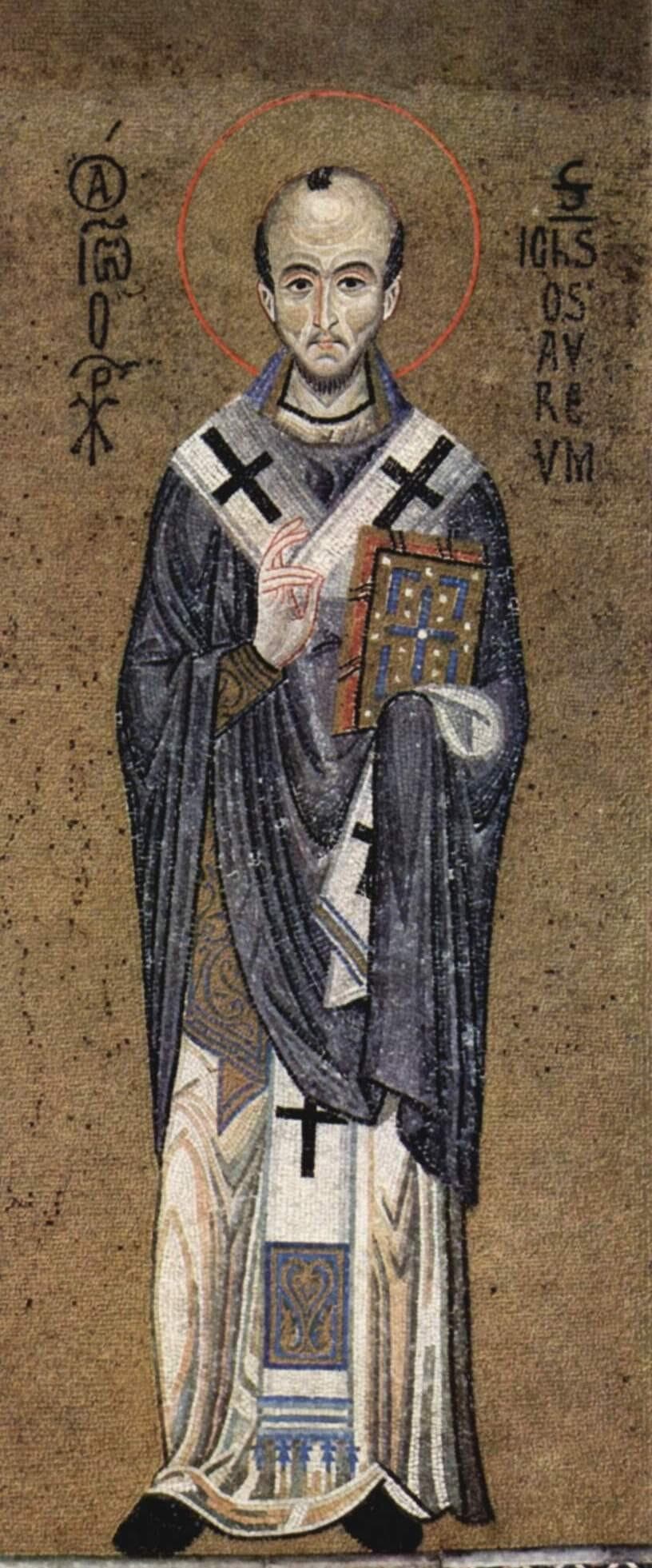
John Chrysostom
Catena Aurea · Matthäusevangelium 12
At that time Jesus went on the sabbath day through the corn; and his disciples were an hungred, and began to pluck the ears of corn, and to eat. But when the Pharisees saw it, they said unto him, Behold, thy disciples do that which is not lawful to do upon the sabbath day. But he said unto them, Have ye not read what David did, when he was an hungred, and they that were with him; How he entered into the house of God, and did eat the shewbread, which was not lawful for him to eat, neither for them which were with him, but only for the Priests? Or have ye not read in the law, how that on the sabbath days the Priests in the temple profane the sabbath, and are blameless? But I say unto you, That in this place is one greater than the temple. But if ye had known what this meaneth, I will have mercy, and not sacrifice, ye would not have condemned the guiltless. For the Son of man is Lord even of the sabbath day.
(Hon. xxxix.) Why then did He lead them through the corn fields on the sabbath, seeing He knew all things, unless He desired to break the sabbath? This he desired indeed, but not absolutely, therefore He broke it not without cause, but furnished a sufficient reason; so that He both caused the Law to cease, and yet offended not against it. Thus in order to soften the Jews, He here introduces a natural necessity; this is what is said, And his disciples being an hungred, began to pluck the ears of corn, and toeat. Although in things which are manifestly sinful, there can be no excuse, he who kills another cannot plead rage, nor he who commits adultery, lust, or any other cause; yet here saying that the disciples were hungry, He delivers them from all accusation.