
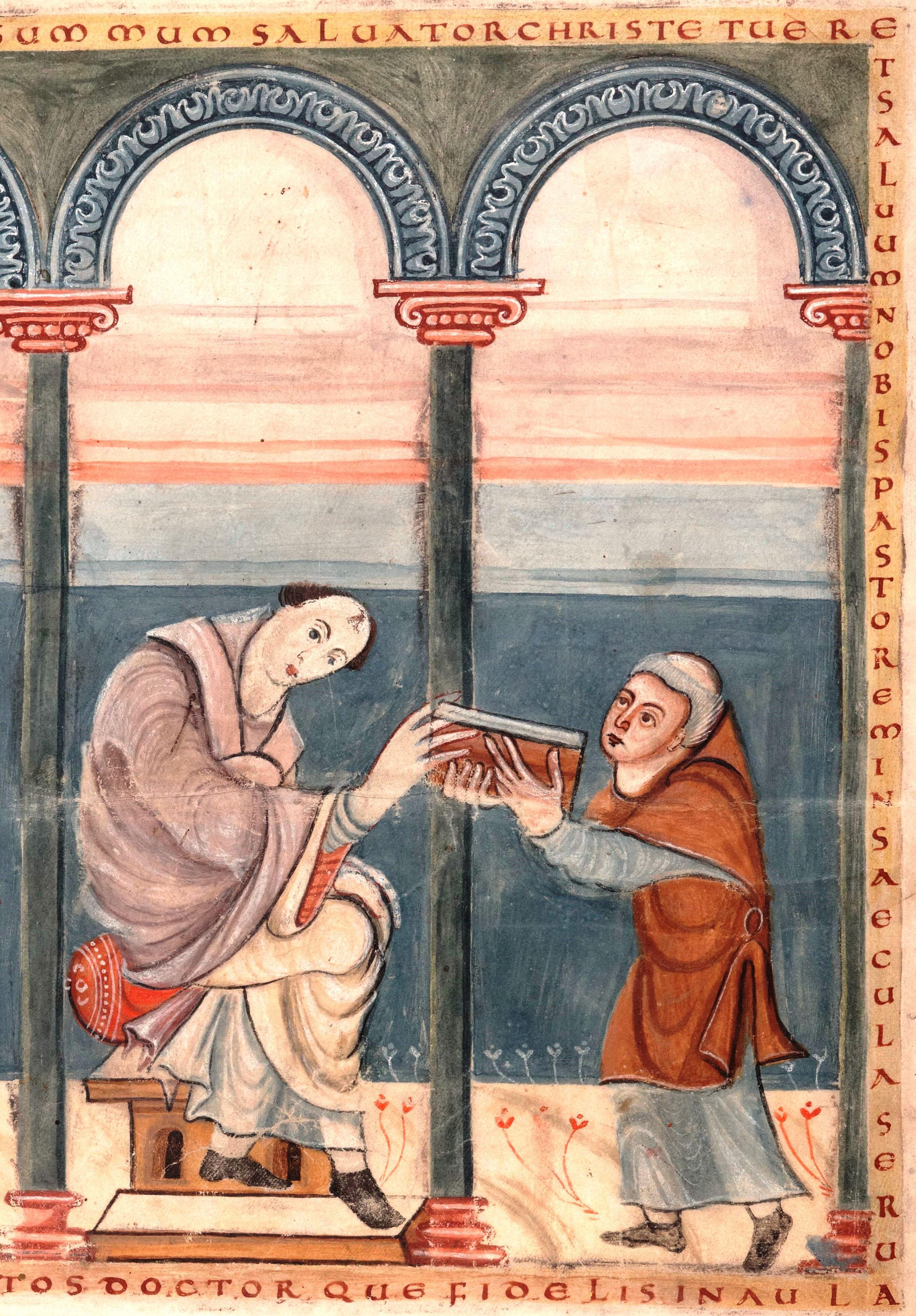
Rabanus Maurus
Catena Aurea · Matthäusevangelium 10
And when he had called unto him his twelve disciples, he gave them power against unclean spirits, to cast them out, and to heal all manner of sickness and all manner of disease. Now the names of the twelve apostles are these; The first, Simon, who is called Peter, and Andrew his brother; James the son of Zebedee, and John his brother; Philip, and Bartholomew; Thomas, and Matthew the Publican; James the son of Alphæus, and Lebbæus, whose surname was Thaddæus; Simon the Canaanite, and Judas Iscariot, who also betrayed him. And Andrew his brother. Philip and Bartholomew. (e Beda.) Philip is interpreted, ‘The mouth of a lamp,’ or ‘of lamps,’ because when he had been enlightened by the Lord, he straightway sought to communicate the light to his brother by the means of his mouth. Bartholomew is a Syriac, not a Hebrew, name, and is interpreted ‘The son of him that raiseth watera,’ that is, of Christ, who raises the hearts of His preachers from earthly to heavenly things, and hangs them there, that the more they penetrate heavenly things, the more they should steep and inebriate the hearts of their hearers with the droppings of holy preaching. Thomas, and Matthew the Publican. James the son of Alphæus, and Thaddæus.
(e Beda.) This James is he who in the Gospels, and also in the Epistle to the Galatians, is called the Lord’s brother. For Mary the wife of Alphæus was the sister of Mary the mother of the Lord; John the Evangelist calls her Mary the wife of Cleophas, probably because Cleophas and Alphæus were the same person. Or Mary herself on the death of Alphæus after the birth of James married Cleophas.