
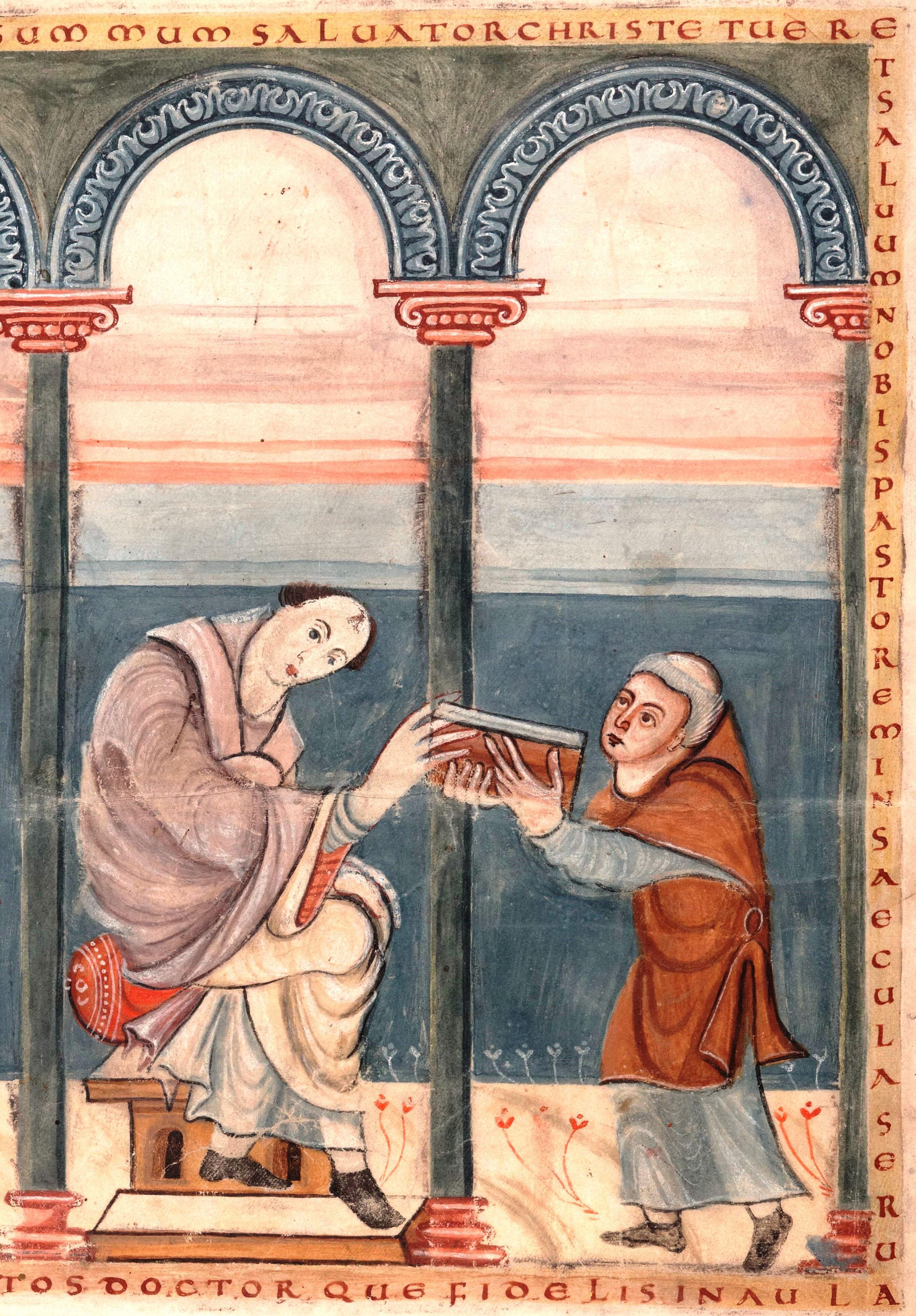
Rabanus Maurus
Catena Aurea · Matthäusevangelium 1
12–15. And after they were brought to Babylon, Jechonias begat Salathiel; and Salathiel begat Zorobabel; and Zorobabel begat Abiud; and Abiud begat Eliakim; and Eliakim begat Azor; and Azor begat Sadoc; and Sadoc begat Achim; and Achim begat Eliud; and Eliud begat Eleazar; and Eleazar begat Matthan; and Matthan begat Jacob.
But let us see what moral signification these names contain. After Jeconias, which means ‘the preparation of the Lord,’ follows Salathiel, i. e. ‘God is my petition,’ for he who is rightly prepared, prays not but of God. Again, he becomes Zorobabel, ‘the master of Babylon,’ that is, of the men of the earth, whom he makes to know concerning God, that He is their Father, which is signified in Abiud. Then that people rise again from their vices, whence follows Eliacim, ‘the resurrection;’ and thence rise to good works, which is Azor, and becomes Sadoch, i. e. ‘righteous;’ and then they are taught the love of their neighbour. He is my brother, which is signified in Achim; and through love to God he says of Him, ‘My God,’ which Eliud signifies. Then follows Eleazar, i. e. ‘God is my helper;’ he recognizes God as his helper. But whereto he tends is shewn in Matthan, which is interpreted ‘gift,’ or ‘giving;’ for he looks to God as his benefactor; and as he wrestled with and overcame his vices in the beginning, so he does in the end of life, which belongs to Jacob, and thus he reaches Joseph, that is, ‘The increase of virtues.’