
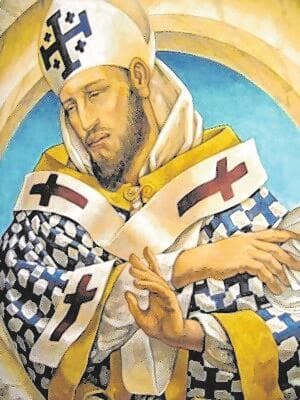
Cyril of Alexandria
Catena Aurea · Matthäusevangelium 1
The book of the generation of Jesus Christ, the Son of David, the Son of Abraham.
(Ep. i. ad Monachos Egypti.) Saith the Apostle of the Only-begotten, Who being in the form of God, thought it no robbery to be equal with God (Phil. 2:6). Who then is this who is in the form of God? or how emptied He Himself, and humbled Himself to the likeness of man? If the above-mentioned heretics dividing Christ into two parts, i. e. the Man and the Word, affirm that it was the Man that was emptied of glory, they must first shew what form and equality with the Father are understood to be, and did exist, which might suffer any manner of emptying. But there is no creature, in its own proper nature, equal with the Father; how then can any creature be said to be emptied? or from what eminence to descend to become man? Or how can he be understood to have taken upon Him, as though He had not at first, the form of a servant? But, they say, the Word being equal with the Father dwelt in Man born of a woman, and this is the emptying. I hear the Son truly saying to the Holy Apostles, If any man love Me, he will keep My saying; and My Father will lore him, and We will come unto him, and make Our abode with him. (John 14:23.) Hear how He saith that He and the Father will dwell in them that love Him. Do you then suppose that we shall grant that He is there emptied of His glory, and has taken upon Him the form of a servant, when He makes His abode in the hearts of them that love Him? Or the Holy Spirit, does He fulfil an assumption of human flesh, when He dwells in our hearts?