
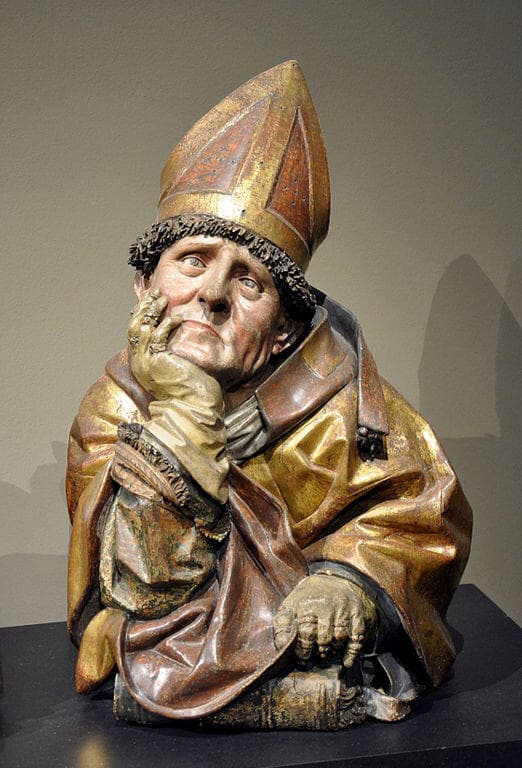
Augustine of Hippo
Catena Aurea · Markusevangelium 5
While he yet spake, there came from the ruler of the synagogue’s house certain which said, Thy daughter is dead: why troublest thou the Master any further? As soon as Jesus heard the word that was spoken, he saith unto the ruler of the synagogue, Be not afraid, only believe. And he suffered no man to follow him, save Peter, and James, and John the brother of James. And he cometh to the house of the ruler of the synagogue, and seeth the tumult, and them that wept and wailed greatly. And when he was come in, he saith unto them, Why make ye this ado, and weep? the damsel is not dead, but sleepeth. And they laughed him to scorn. But when he had put them all out, he taketh the father and the mother of the damsel, and them that were with him, and entereth in where the damsel was lying. And he took the damsel by the hand, and said unto her, Talitha cumi; which is, being interpreted, Damsel, I say unto thee, arise. And straightway the damsel arose, and walked; for she was of the age of twelve years. And they were astonished with a great astonishment. And he charged them straitly that no man should know it; and commanded that something should be given her to eat.
(ubi sup.) It is not said that he assented to his friends who brought the tidings and wished to prevent the Master from coming, so that our Lord’s saying, Fear not, only believe, is not a rebuke for his want of faith, but was intended to strengthen the belief which he had already. But if the Evangelist had related, that the ruler of the synagogue joined the friends who came from his house, in saying that Jesus should not be troubled, the words which Matthew relates him to have said, namely, that the damsel was dead, would then have been contrary to what was in his mind. It goes on, And he suffered no man to follow him, save Peter, and James, and John the brother of James.