
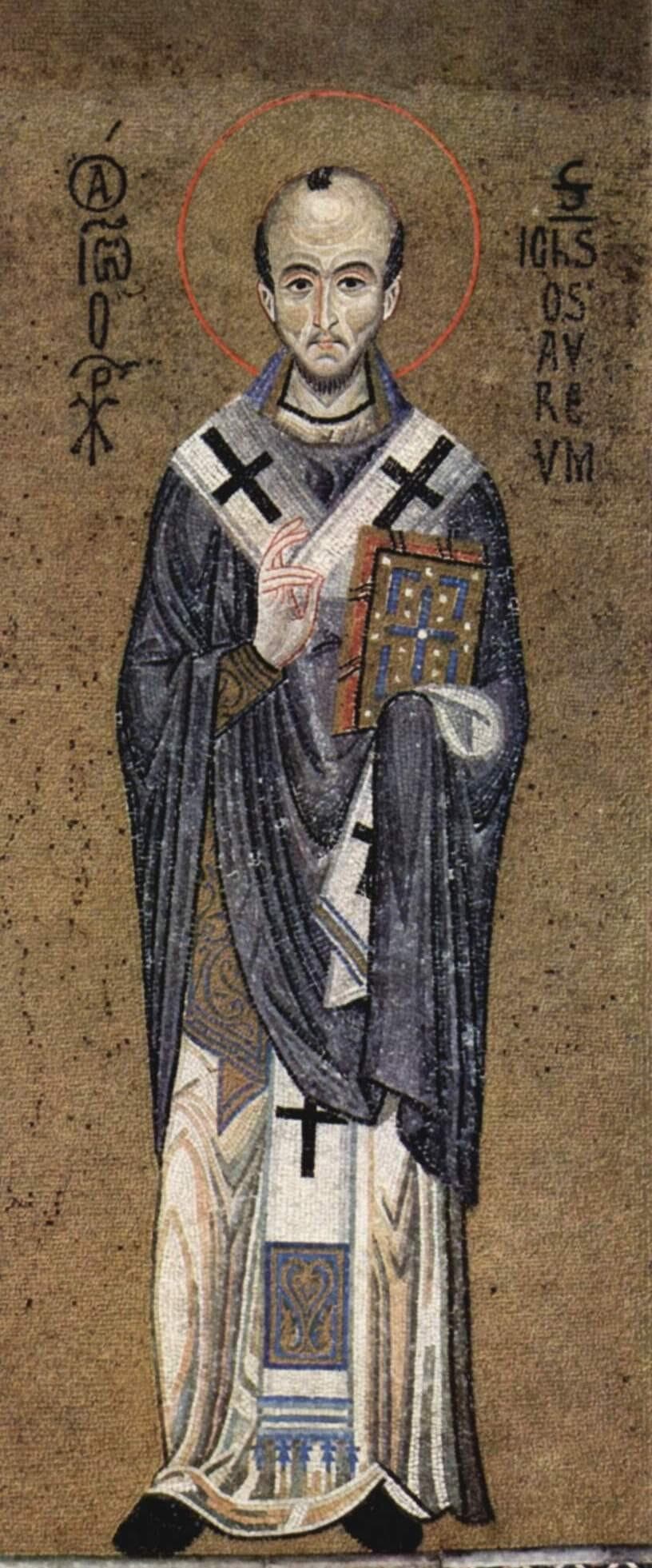
John Chrysostom
Catena Aurea · Markusevangelium 10
And he arose from thence, and cometh into the coasts of Judæa by the farther side of Jordan: and the people resort unto him again; and, as he was wont, he taught them again. And the Pharisees came to him, and asked him, Is it lawful for a man to put away his wife? tempting him. And he answered and said unto them, What did Moses command you? And they said, Moses suffered to write a bill of divorcement, and to put her away. And Jesus answered and said unto them, For the hardness of your heart he wrote you this precept. But from the beginning of the creation God made them male and female. For this cause shall a man leave his father and mother, and cleave to his wife; And they twain shall be one flesh: so then they are no more twain, but one flesh. What therefore God hath joined together, let not man put asunder. And in the house his disciples asked him again of the same matter. And he saith unto them, Whosoever shall put away his wife, and marry another, committeth adultery against her. And if a woman shall put away her husband and be married to another, she committeth adultery.
(ubi sup.) If however he had wished one wife to be put away and another to be brought in, He would have created several women. Nor did God only join one woman to one man, but He also bade a man quit his parents and cleave to his wife. Wherefore it goes on: And he said, (that is, God said by Adam,) For this cause shall a man leave his father and mother, and cleave to his wife. From the very mode of speech, shewing the impossibility of severing marriage, because He said, He shall cleave.