
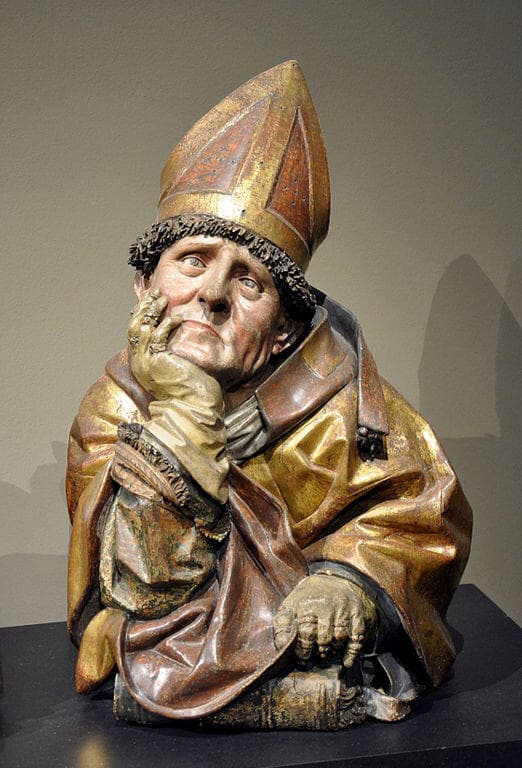
Augustine of Hippo
Catena Aurea · Lukasevangelium 9
And the apostles, when they were returned, told him all that they had done. And he took them, and went aside privately into a desert place belonging to the city called Bethsaida. And the people, when they knew it, followed him: and he received them, and spake unto them of the kingdom of God, and healed them that had need of healing. And when the day began to wear away, then came the twelve, and said unto him, Send the multitude away, that they may go into the towns and country round about, and lodge, and get victuals: for we are here in a desert place. But he said unto them, Give ye them to eat. And they said, We have no more but five loaves and two fishes; except we should go and buy meat for all this people. For they were about five thousand men. And he said to his disciples, Make them sit down by fifties in a company. And they did so, and made them all sit down. Then he took the five loaves and the two fishes, and looking up to heaven, he blessed them, and brake, and gave to the disciples to set before the multitude. And they did eat, and were all filled: and there was taken up of fragments that remained to them twelve baskets.
(de Con. Ev. l. ii. c. 46.) In these words indeed Luke has strung together in one sentence the answer of Philip, saying, Two hundred pennyworth of bread is not sufficient for them, but that every one may have a little, (John 6:9.) and the answer of Andrew, There is a lad here who has five loaves and two small fishes, as John relates. For when Luke says, We have no more but five loaves and two fishes, he refers to the answer of Andrew. But that which he added, Except we go and buy food for all the people, seems to belong to Philip’s answer, save that he is silent about the two hundred pennyworth, although this may be implied also in the expression of Andrew himself. For when he had said, There is a lad here who has five loaves and two fishes, he added, But what are these among so many? that is to say, unless we go and buy meat for all this people. From which diversity of words, but harmony of things and opinions, it is sufficiently evident that we have this wholesome lesson given us, that we must seek for nothing in words but the meaning of the speaker; and to explain this clearly, ought to be the care of all truthtelling authors whenever they relate any thing concerning man, or angel, or God.