
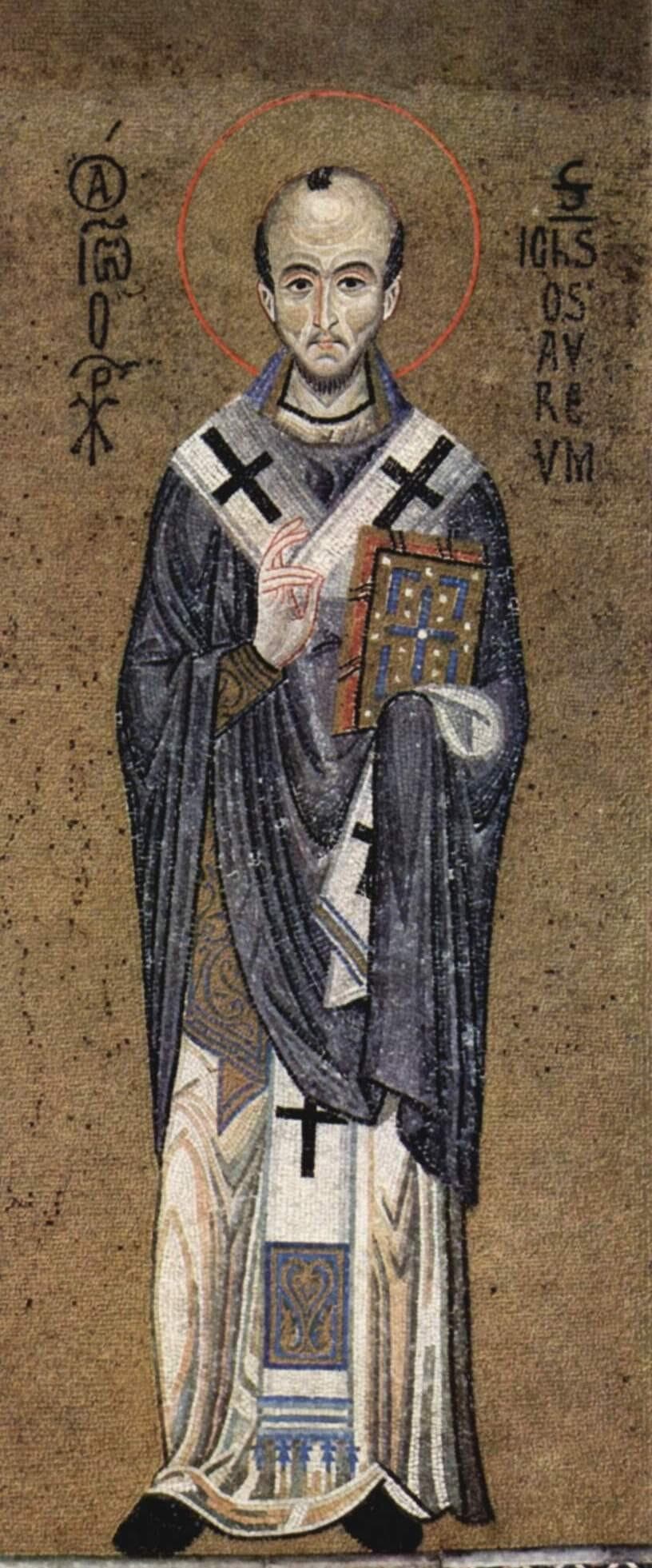
John Chrysostom
Catena Aurea · Lukasevangelium 7
Now when he had ended all his sayings in the audience of the people, he entered into Capernaum. And a certain centurion’s servant, who was dear unto him, was sick, and ready to die. And when he heard of Jesus, he sent unto him the elders of the Jews, beseeching him that he would come and heal his servant. And when they came to Jesus, they besought him instantly, saying, That he was worthy for whom he should do this: For he loveth our nation, and he hath built us a synagogue. Then Jesus went with them. And when he was now not far from the house, the centurion sent friends to him, saying unto him, Lord, trouble not thyself: for I am not worthy that thou shouldest come under my roof: Wherefore neither thought I myself worthy to come unto thee: but say in a word, and my servant shall be healed. For I also am a man set under authority, having under me soldiers, and I say unto one, Go, and he goeth; and to another, Come, and he cometh; and to my servant, Do this, and he doeth it. When Jesus heard these things, he marvelled at him, and turned him about, and said unto the people that followed him, I say unto you, I have not found so great faith, no, not in Israel. And they that were sent, returning to the house, found the servant whole that had been sick.
(Hom. 26. in Matt.) How again does Matthew tell us that the centurion said, I am not worthy that thou shouldest enter under my roof, while Luke says here, that he beseeches Him that He would come. Now it seems to me that Luke sets before us the flatteries of the Jews. For we may believe that when the centurion wished to depart, the Jews drew him back, enticing him, saying, We will go and bring him. Hence also their prayers are full of flattery, for it follows, But when they came to Jesus, they besought him instantly, saying that he was worthy. Although it became them to have said, He himself was willing to come and supplicate Thee, but we detained him, seeing the affliction, and the body which was lying in the house, and so to have drawn out the greatness of his faith; but they would not for envy reveal the faith of the man, lest He should seem some great one to whom the prayers were addressed. But wherein Matthew represents the centurion to be not an Israelite, while Luke says, he has built us a synagogue, there is no contradiction, for he might not have been a Jew, and yet built a synagogue.