
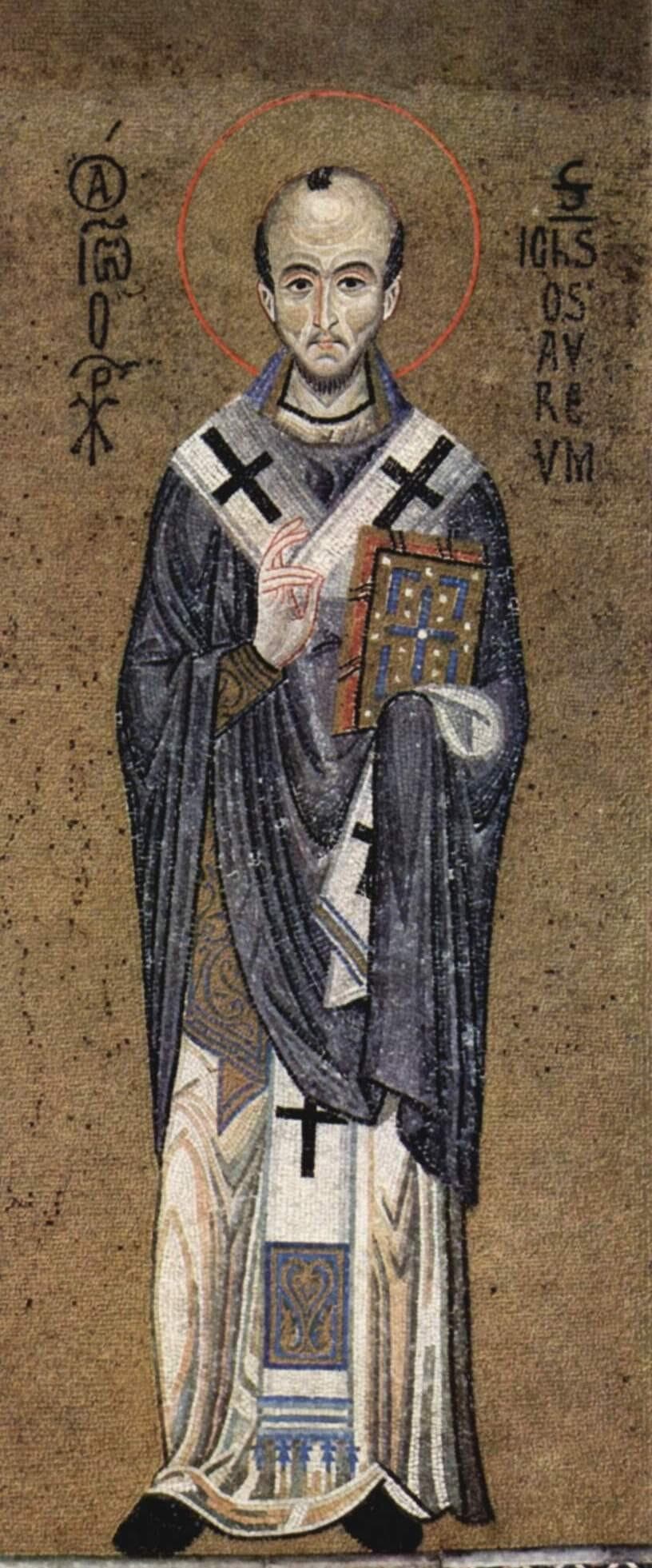
John Chrysostom
Catena Aurea · Lukasevangelium 5
And it came to pass on a certain day, as he was teaching, that there were Pharisees and doctors of the law sitting by, which were come out of every town of Galilee, and Judæa, and Jerusalem: and the power of the Lord was present to heal them. And, behold, men brought in a bed a man which was taken with a palsy: and they sought means to bring him in, and to lay him before him. And when they could not find by what way they might bring him in because of the multitude, they went upon the housetop, and let him down through the tiling with his couch into the midst before Jesus. And when he saw their faith, he said unto him, Man, thy sins are forgiven thee. And the Scribes and the Pharisees began to reason, saying, Who is this which speaketh blasphemies? Who can forgive sins, but God alone? But when Jesus perceived their thoughts, he answering said unto them, What reason ye in your hearts? Whether is easier, to say, Thy sins be forgiven thee; or to say, Rise up and walk? But that ye may know that the Son of man hath power upon earth to forgive sins, (he said unto the sick of the palsy,) I say unto thee, Arise, and take up thy couch, and go unto thine house. And immediately he rose up before them, and took up that whereon he lay, and departed to his own house, glorifying God. And they were all amazed, and they glorified God, and were filled with fear, saying, We have seen strange things to day.
(ubi sup.) If then you disbelieve the first, (i. e. the forgiveness of sins,) behold, I add another, seeing that I lay open your inmost thoughts. Again, another that I make whole the body of the palsied man. Hence He adds, Whether is it easier? It is very plain that it is easier to restore the body to health. For as the soul is far nobler than the body, so is the forgiveness of sins more excellent than the healing of the body. But since you believe not the former, because it is hid; I will add that which is inferior, yet more open, in order that thereby that which is secret may be made manifest. And indeed in addressing the sick man, He said not, I forgive thee thy sins, expressing His own power, but, Thy sins are forgiven thee. But they compelled Him to declare more plainly His own power to them, when He said, But that you may know.