
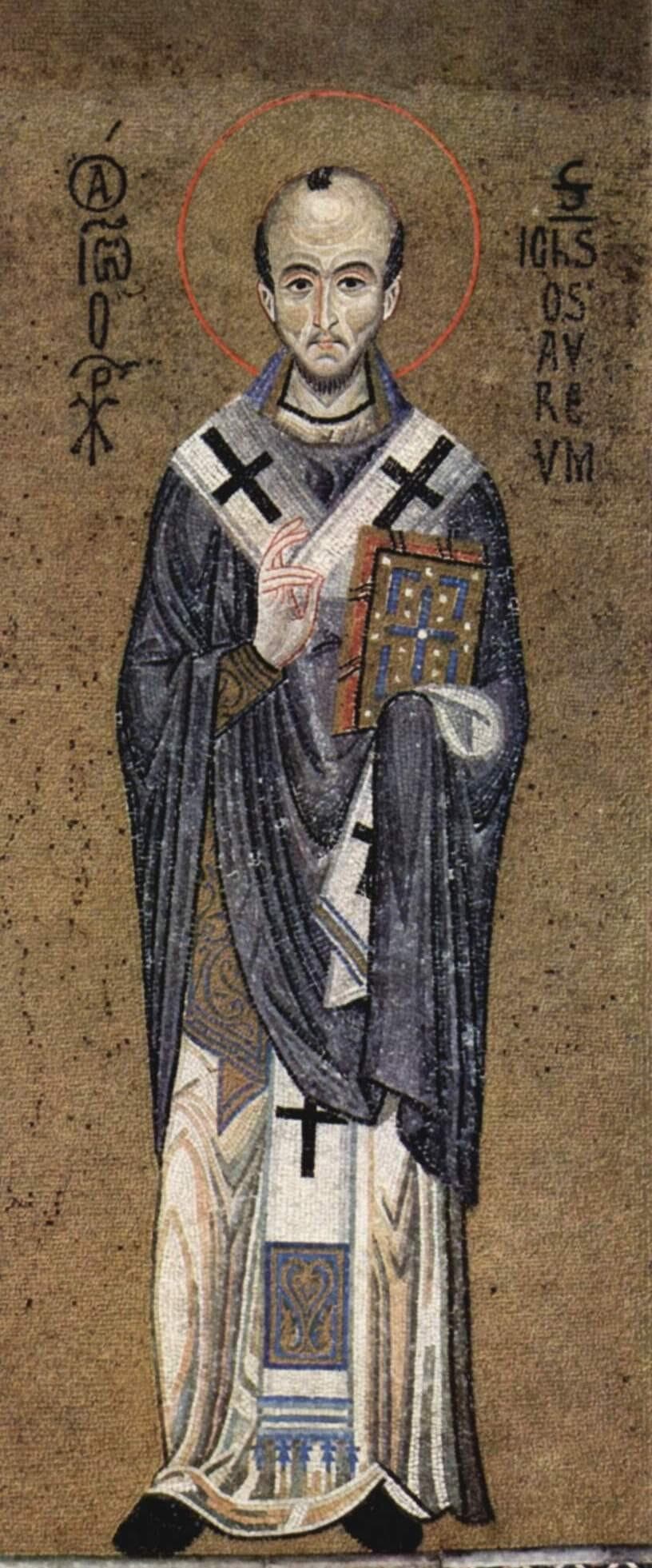
John Chrysostom
Catena Aurea · Lukasevangelium 22
And he came out, and went, as he was wont, to the mount of Olives; and his disciples also followed him. And when he was at the place, he said unto them, Pray that ye enter not into temptation. And he was withdrawn from them about a stone’s cast, and kneeled down, and prayed, Saying, Father, if thou be willing, remove this cup from me: nevertheless not my will, but thine, be done.
Now every art is set forth by the words and works of him who teacheth it. Because then our Lord had come to teach no ordinary virtue, therefore He speaks and does the same things. And so having in words commanded to pray, lest they enter into temptation, He does the same likewise in work, saying, Father, if thou be willing, remove this cup from me. He saith not the words, If thou wilt, as if ignorant whether it was pleasing to the Father. For such knowledge was not more difficult than the knowledge of His Father’s substance, which He alone clearly knew, according to John, As the Father knoweth me, even so have I known the Father. (John 10:15.) Nor says He this, as refusing His Passion. For He who rebuked a disciple, who wished to prevent His Passion, (Matt. 16:23.) so as even after many commendations, to call him Satan, how should He be unwilling to be crucified? Consider then why it was so said. How great a thing was it to hear that the unspeakable God, who passes all understanding, was content to enter the virgin’s womb, to suck her milk, and to undergo every thing human. Since then that was almost incredible which was about to happen, He sent first indeed Prophets to announce it, afterwards He Himself comes clothed in the flesh, so that you could not suppose Him to be a phantom. He permits His flesh to endure all natural infirmities, to hunger, to thirst, to sleep, to labour, to be afflicted, to be tormented; on this account likewise He refuses not death, that He might manifest thereby His true humanity.