
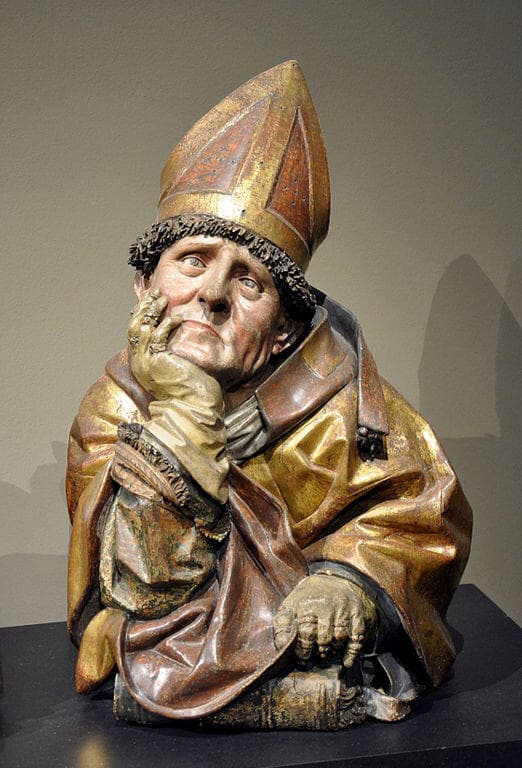
Augustine of Hippo
Catena Aurea · Lukasevangelium 18
And it came to pass, that as he was come nigh unto Jericho, a certain blind man sat by the way side begging: And hearing the multitude pass by, he asked what it meant. And they told him, that Jesus of Nazareth passeth by. And he cried, saying, Jesus, thou Son of David, have mercy on me. And they which went before rebuked him, that he should hold his peace: but he cried so much the more, Thou Son of David, have mercy on me. And Jesus stood, and commanded him to be brought unto him: and when he was come near, he asked him, Saying, What wilt thou that I shall do unto thee? And he said, Lord, that I may receive my sight. And Jesus said unto him, Receive thy sight: thy faith hath saved thee. And immediately he received his sight, and followed him, glorifying God: and all the people, when they saw it, gave praise unto God.
We might understand the expression of being nigh to Jericho, as if they had already gone out of it, but were still near. It might, though less common in this sense, be so taken here, since Matthew relates, that as they were going out of Jericho, two men received their sight who sat by the way side. There need be no question about the number, if we suppose that one of the Evangelists remembering only one was silent about the other. Mark also mentions only one, and he too says that he received his sight as they were going out of Jericho; he has given also the name of the man and of his father, to let us understand that this one was well known, but the other not so, so that it might come to pass that the one who was known would be naturally the only one mentioned. But seeing that what follows in St. Luke’s Gospel most plainly proves the truth of his account, that while they were yet coming to Jericho, the miracle took place, we cannot but suppose that there were two such miracles, the first upon one blind man when our Lord was coming to that city, the second on two, when He was departing out of it; Luke relating the one, Matthew the other.