
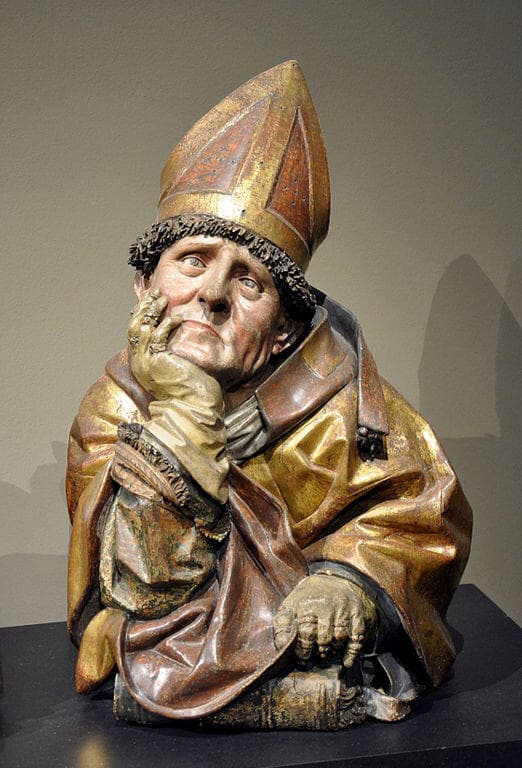
Augustine of Hippo
Catena Aurea · Lukasevangelium 15
Now his elder son was in the field: and as he came and drew nigh to the house, he heard musick and dancing. And he called one of the servants, and asked what these things meant. And he said unto him, Thy brother is come; and thy father hath killed the fatted calf, because he hath received him safe and sound. And he was angry, and would not go in: therefore came his father out, and intreated him. And he answering said to his father, Lo, these many years do I serve thee, neither transgressed I at any time thy commandment: and yet thou never gavest me a kid, that I might make merry with my friends: But as soon as this thy son was come, which hath devoured thy living with harlots, thou hast killed for him the fatted calf. And he said unto him, Son, thou art ever with me, and all that I have is thine. It was meet that we should make merry, and be glad: for this thy brother was dead, and is alive again; and was lost, and is found.
He is angry even also now, and still is unwilling to enter. When then the fulness of the Gentiles shall have come in, His father will go out at the fit time that all Israel also may be saved, as it follows, therefore came his father out and entreated him. (Rom. 11:26.) For there shall he at some time an open calling of the Jews to the salvation of the Gospel. Which manifestation of calling he calls the going out of the father to entreat the elder son. Next the answer of the elder son involves two questions; for it follows, And he answering said to his father, Lo these many years do I serve thee, neither transgressed I at any time thy commandment. With respect to the commandment not transgressed, it at once occurs, that it was not spoken of every command, but of that most essential one, that is, that he was seen to worship no other God but one, the Creator of all. Nor is that son to be understood to represent all Israelites, but those who have never turned from God to idols. For although he might desire earthly things, yet sought he them from God alone, though in common with sinners. Hence it is said, I was as a least before thee, and I am always with thee. (Ps. 7, 22.) But who is the kid which he never received to make merry upon? for it follows, Thou never gavest me a kid, &c. Under the name of a kid the sinner may be signified.