
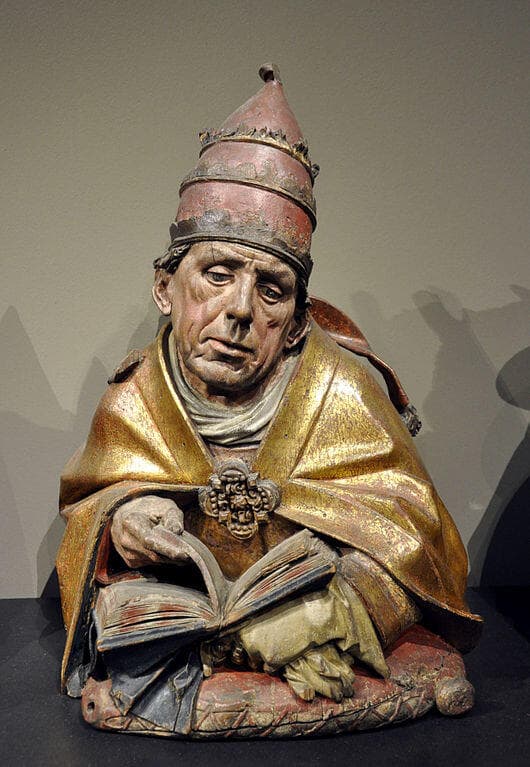
Gregory the Great
Catena Aurea · Lukasevangelium 15
Then drew near unto him all the Publicans and sinners for to hear him. And the Pharisees and Scribes murmured, saying, This man receiveth sinners, and eateth with them. And he spake this parable unto them, saying, What man of you, having an hundred sheep, if he lose one of them, doth not leave the ninety and nine in the wilderness, and go after that which is lost, until he find it? And when he hath found it, he layeth it on his shoulders, rejoicing. And when he cometh home, he calleth together his friends and neighbours, saying unto them, Rejoice with me; for I have found my sheep which was lost. I say unto you, that likewise joy shall be in heaven over one sinner that repenteth, more than over ninety and nine just persons, which need no repentance.
(in Hom. 34. in Evang.) From which we may gather, that true justice feels compassion, false justice scorn, although the just are wont rightly to repel sinners. But there is one act proceeding from the swelling of pride, another from the zeal for discipline. For the just, though without they spare not rebukes for the sake of discipline, within cherish sweetness from charity. In their own minds they set above themselves those whom they correct, whereby they keep both them under by discipline, and themselves by humility. But, on the contrary, they who from false justice are wont to pride themselves, despise all others, and never in mercy condescend to the weak; and thinking themselves not to be sinners, are so much the worse sinners. Of such were the Pharisees, who condemning our Lord because He received sinners, with parched hearts reviled the very fountain of mercy. But because they were so sick that theyknew not of their sickness, to the end that they might know what they were, the heavenly Physician answers them with mild applications. For it follows, And he spake this parable unto them, saying, What man of you having an hundred sheep, and if he lose one of them, does not go after it, &c. He gave a comparison which man might recognise in himself, though it referred to the Creator of men. For since a hundred is a perfect number, He Himself had a hundred sheep, seeing that He possessed the nature of the holy angels and men. Hence he adds, Having an hundred sheep.