
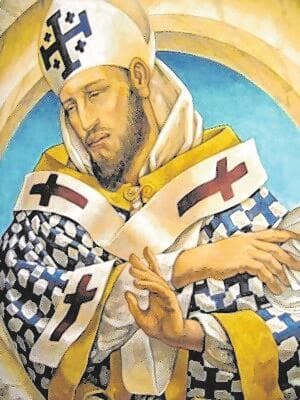
Cyril of Alexandria
Catena Aurea · Lukasevangelium 13
The same day there came certain of the Pharisees, saying unto him, Get thee out, and depart hence: for Herod will kill thee. And he said unto them, Go ye, and tell that fox, Behold, I cast out devils, and I do cures to day and to morrow, and the third day I shall be perfected. Nevertheless I must walk to day, and to morrow, and the day following: for it cannot be that a prophet perish out of Jerusalem. O Jerusalem, Jerusalem, which killest the prophets, and stonest them that are sent unto thee; how often would I have gathered thy children together, as a hen doth gather her brood under her wings, and ye would not! Behold, your house is left unto you desolate: and verily I say unto you, Ye shall not see me, until the time come when ye shall say, Blessed is he that cometh in the name of the Lord.
Or else the discourse seems to change here, and not to refer so much to the character of Herod as some think, as to the lies of the Pharisees. For He almost represents the Pharisees themselves to be standing near, when He said, Go tell this fox, as it is in the Greek. Therefore he commanded them to say that which might rouse the multitude of Pharisees. Behold, said He, I cast out devils, and I do cures to day and to morrow, and on the third day I shall be perfected. He promises to do what was displeasing to the Jews, namely, to command the evil spirits, and deliver the sick from disease, until in His own person He should undergo the suffering of the cross. But because the Pharisees thought that He who was the Lord of hosts, feared the hand of Herod. He refutes this, saying, Nevertheless I must walk to day and to morrow, and the day following. When He says must, He by no means implies a necessity imposed upon Him, but rather that He walked where He liked according to the inclination of His will, until He should come to the end of the dreadful cross, the time of which Christ shews to be now drawing near, when He says, To day and to morrow.