
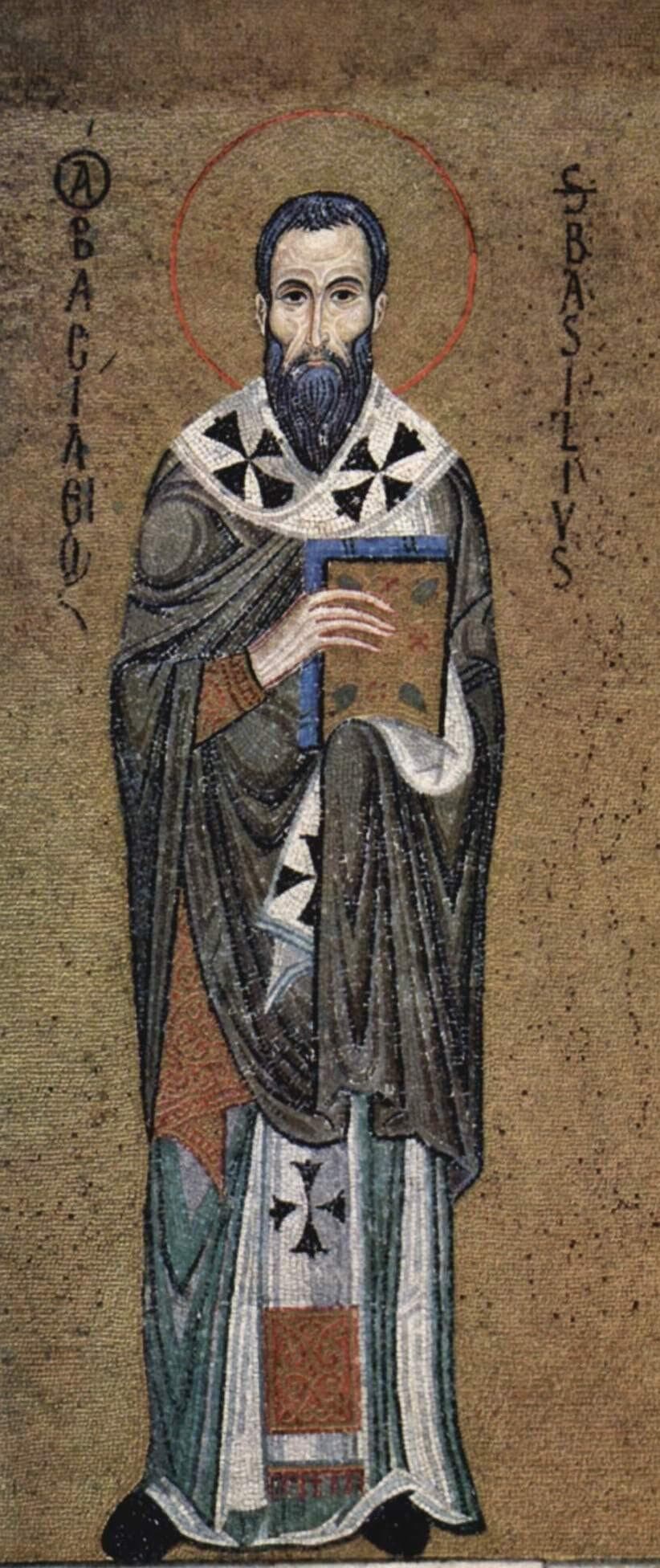
Basil the Great
Catena Aurea · Lukasevangelium 10
And, behold, a certain Lawyer stood up, and tempted him, saying, Master, what shall I do to inherit eternal life? He said unto him, What is written in the law? how readest thou? And he answering said, Thou shalt love the Lord thy God with all thy heart, and with all thy soul, and with all thy strength, and with all thy mind; and thy neighbour as thyself. And he said unto him, Thou hast answered right: this do, and thou shalt live.
(Reg. fus. ad int. 2.) But if any one ask how the love of God is to be obtained, we are sure that the love of God cannot be taught. For neither did we learn to rejoice in the presence of light, or to embrace life, or to love our parents and children; much less were we taught the love of God, but a certain seminal principle was implanted in us, which has within itself the cause, that man clings to God; which principle the teaching of the divine commands is wont to cultivate diligently, to foster watchfully, and to carry on to the perfection of divine grace. For naturally we love good; we love also what is our own, and akin to us; we likewise of our own accord pour forth all our affections on our benefactors. If then God is good, but all things desire that good, which is wrought voluntarily, He is by nature inherent in us, and although from His goodness we are far from knowing Him, yet from the very fact that we proceeded forth from Him, we are bound to love Him with exceeding love, as in truth akin to us; He is likewise also a greater benefactor than all whom by nature we love here. (ad int 3.). And again. The love of God then is the first and chief command, but the second, as filling up the first and filled up by it, bids us to love our neighbour. Hence it follows, And thy neighbour as thyself. But we have an instinct given us by God to perform this command, as who does not know that man is a kind and social animal? For nothing belongs so much to our nature as to communicate with one another, and mutually to need and love our relations. Of those things then of which in the first place He gave us the seed, He afterwards requires the fruits.