
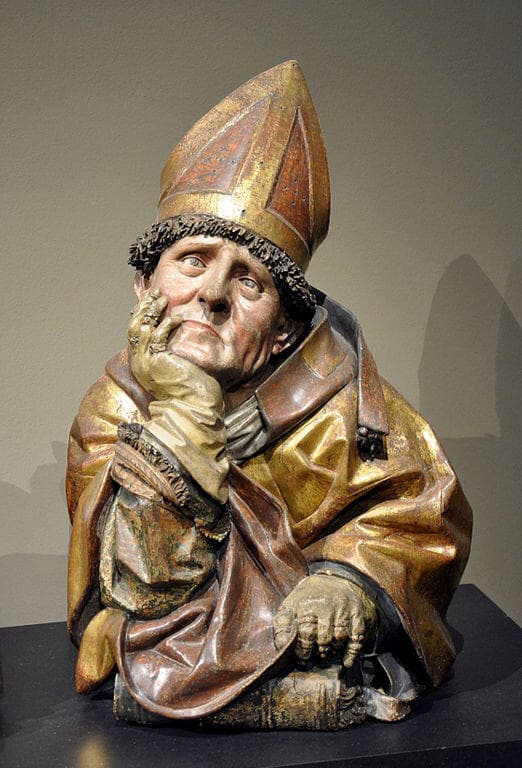
Augustine of Hippo
Catena Aurea · Lukasevangelium 10
But he, willing to justify himself, said unto Jesus, And who is my neighbour? And Jesus answering said, A certain man went down from Jerusalem to Jericho, and fell among thieves, which stripped him of his raiment, and wounded him, and departed, leaving him half dead. And by chance there came down a certain Priest that way: and when he saw him, he passed by on the other side. And likewise a Levite, when he was at the place, came and looked on him, and passed by on the other side. But a certain Samaritan, as he journeyed, came where he was; and when he saw him, he had compassion on him, And went to him, and bound up his wounds, pouring in oil and wine, and set him on his own beast, and brought him to an inn, and took care of him. And on the morrow when he departed, he took out two pence, and gave them to the host, and said unto him, Take care of him; and whatsoever thou spendest more, when I come again, I will repay thee. Which now of these three, thinkest thou, was neighbour unto him that fell among the thieves? Aud he said, He that shewed mercy on him. Then said Jesus unto him, Go, and do thou likewise.
(Serm. 171.) For what so distant, what so far removed, as God from man, the immortal from the mortal, the just from sinners, not in distance of place, but of likeness. Since then He had in Him two good things, righteousness and immortality, and we two evils, that is unrighteousness, and mortality, if He had taken upon Him both our evils He would have been our equal, and with us have had need of a deliverer. That He might be then not what we are, but near us, He was made not a sinner, as thou art, but mortal like unto thee. By taking upon Himself punishment, not taking upon Himself guilt, He destroyed both the punishment and the guilt.